Is it a trend or a mirage?
That was our thought after a Ski-Doo dealer told us recently that he had several longtime customers who have traded down in the horsepower hierarchy. That’s right – they dumped their turbocharged trail sleds for naturally aspirated ones.
Could it be that the cap has finally been reached, where some buyers in a rather status-focused, high-end segment of the snowmobile market realize they don’t need all that power?!
“I think that may be part of it,” the Wisconsin-based dealer said. “The modern 850s have more power than most anybody will hardly ever use on a twisting trail anyway. When turbocharged, they’re kind of ridiculous. So, I’ve had some customers who’ve always needed the latest-and-greatest tell me that the turbo was too much – too much power, too much weight, too much complexity, too much money. The 850s will give them everything they need and then some.”
This article originally appeared in the October 2025 issue of Snow Goer magazine. That means you could have enjoyed it long ago if you only subscribed! Go ahead and sign up today to get the print or digital edition of the magazine and feed your love of the greatest winter sport ever created.
Meanwhile, a Polaris dealer told us a somewhat similar story. In his case, though, he said it was the up-power 9R engine that was pulling some people away from Patriot Turbo models. “The 9R engine might get top-ended, maybe,” the dealer said, “but anybody who has been on a sled with a 9R has been blown away by its power combined with its light weight.”
So, a few short years after it seemed like naturally aspirated big bores were getting squeezed out of the super-enthusiast segment, they’re suddenly back in focus.
Therefore, we tested every two-stroke, big bore, naturally aspirated 2026 trail sled we could get our gloved hands on at the Rode Reports/Snow Shoot test event.
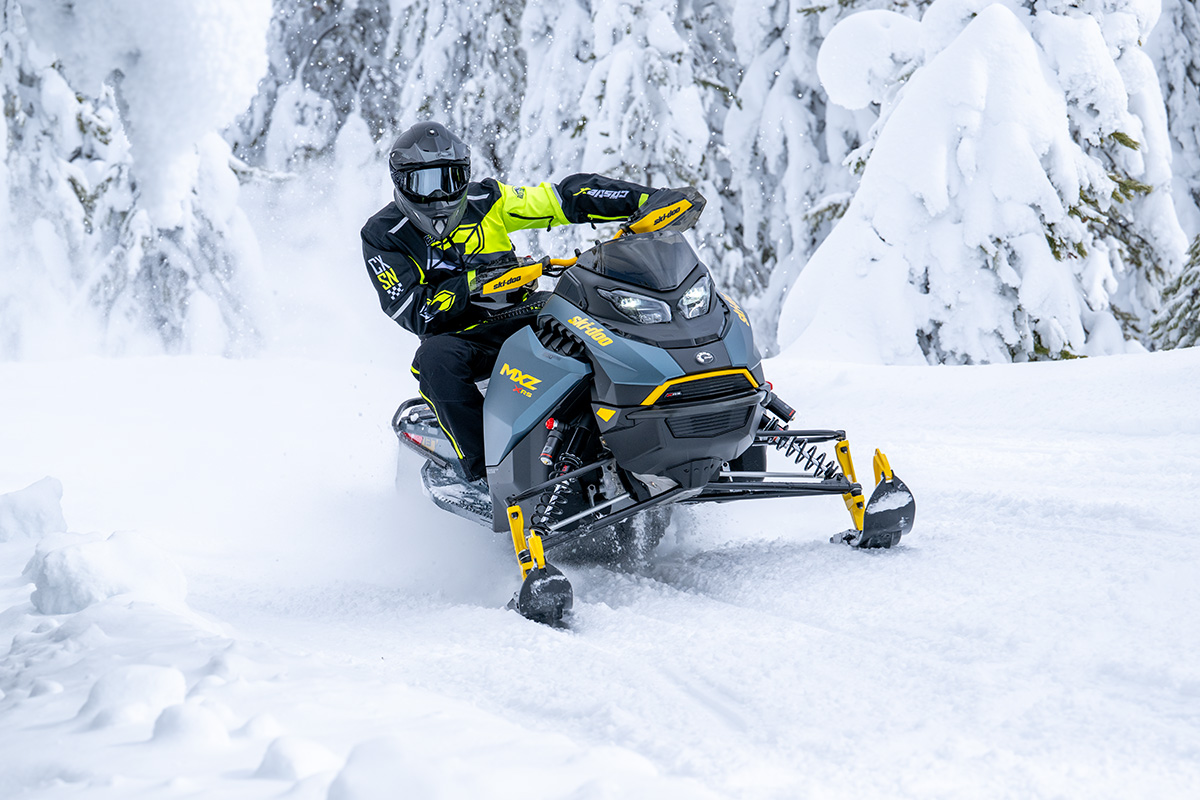
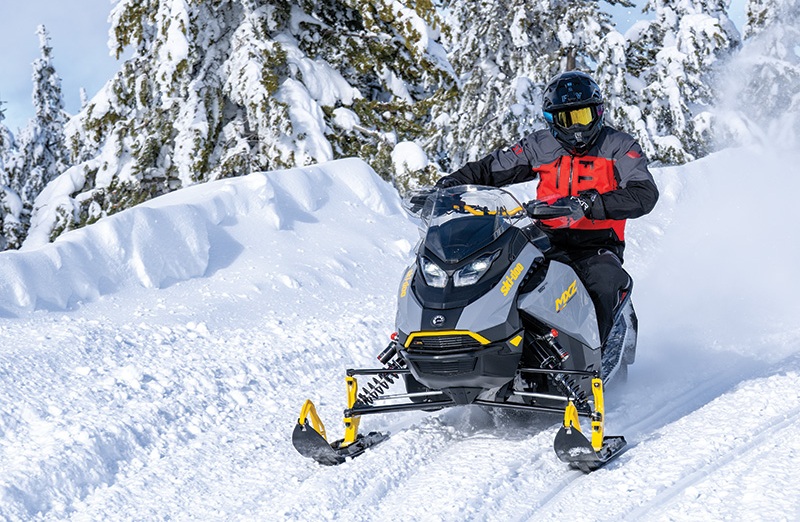
In this case, the machines were the Polaris 850 Indy XC 137, Polaris 850 Indy VR1 137 with Dynamix, Polaris 9R Indy XCR 137, Ski-Doo MXZ X-RS 850 E-TEC 137 and Ski-Doo MXZ Adrenaline with Blizzard Package 850 E-TEC 129. We’ll present our first-hand feedback on them by brand to help would-be buyers understand the differences by trim level so they can find the right model for their riding style and pocket book.
Sadly, Arctic Cat did not attend the Rode Reports event last February because they were in the midst of an ownership change. Lynx, meanwhile, didn’t bring a single non-turbocharged trail, crossover or mountain sled to the event. We will, though, recap what each of those brands is offering for 2026 and share some thoughts from riding 2025 versions of the machines in the past.
Ski-Doo’s Interesting 850 Options
MXZ X-RS vs . MXZ Adrenaline with Blizzard Package
In Ski-Doo land – where package proliferation is key – it’s important to know what’s on each step of the feature-and-benefit ladder. We’ll try to be concise.
Within the naturally aspirated big bore class, an MXZ Adrenaline is now the in-season baseline. While found in the same REV Gen5 chassis and featuring the same rMotion X/RAS RX suspension geometry as the upgraded models, it has non-adjustable KYB 36 shocks, a smallish 4.5-inch digital gauge and a baseline RipSaw track with 1.25-inch lugs.
A buyer stepping up to the MXZ Adrenaline with Blizzard Package machine will get a rack steering system, upgraded LED lighting, three-position KYB Pro 36 EA-3 shocks, a larger and more informative 7.2-inch digital gauge and a pre-studded Ice Ripper XT track.
The spring-order MXZ X package shares the Blizzard’s steering system, shocks, gauge and headlight upgrades, but adds a four-piston brake caliper, multiple track options between Ice Ripper XT and RipSaw designs, and the option for a factory-installed, top-end 10.25-inch touchscreen display with on-screen mapping.
At the top of the 850-equipped heap is the X-RS package, with reinforced running boards and suspension rails, a choice of beefy KYB Pro 40 EA-3 shocks or self-adjusting, semi-active KYB Pro Smart Shox, and similar gauge and track choices as found on the X.
One more layer exists in Ski-Doo’s 2026 trail lineup – the MXZ X-RS Competition Package. However, it is not available with the unboosted 850.
For our test, we had two models:
• An MXZ X-RS 850 E-TEC equipped with a 15- by 137- by 1.5-inch pre-studded track, 10.25-inch display and the standard KYB Pro 40mm shocks. In mineral blue coloration, its MSRP is $19,349.
• An MX Z Adrenaline with Blizzard Package 850 with a 129-inch Ice Ripper XT track, 7.2-inch gauge and KYB 36 EA-3 shocks . In monument grey, it has a $17,199 MSRP.
New for 2026, the X-RS model gets improved mapping, group ride functionality and other upgrades to the 10.25-inch display. The Blizzard package, meanwhile, receives the stepped-keel Pilot RX skis for the first time. They provide noticeably improved handling when combined with the RAS RX front suspension geometry compared to the previous Pilot X boards.
The Ride
Saddling up to each model, ergonomics were unsurprisingly quite similar. They share the compact yet roomy REV Gen5 chassis layout with a curved handlebar atop a 90mm riser, the narrow Trail seat and stock see-through handguards.
The Blizzard offers an iota more wind protection from its sculpted “low” windshield with small side flares compared to the “ultra-low” mini screen found on the X-RS. Still, both sleds leave the rider’s upper torso exposed to self-generated wind chills.
Each Ski-Doo positions the rider in a moderately aggressive stance. Running boards with large snow evacuation holes are violated at the rider’s ankles by bumps for the brake (left) and chaincase right). Open toe holds on the outside edge have become the Ski-Doo norm. Some folks love the setup – if you’re not one of them, get the accessory Lateral Footplates ($139 MSRP).
Sliding back and forth across the seat on any REV Gen5 MXZ is made easy by a spacious layout. Ski-Doo engineers designed a step into the side panel to provide a supported knee position when aggressively leaning out and forward to plant the inside ski in tight corners.
When first introduced, our team applauded the ErgoStep design. But in more recent years, some doubt has crept in. “To get really far forward, I feel like I’ve got to get around two edges instead of just one,” one rider noted.
The Ski-Doos share the 165-horsepower Rotax 850 powerplant, plus the pDrive primary and vented QRS secondary. Therefore, the acceleration feel was quite similar, with a sharp burst at clutch engagement and a sprint through mid-range to an impressive top-end. Ski-Doo’s E-TEC direct injected 850 impresses us every time with its incredibly consistent and predictable performance and run quality.
Our X-RS demo got a firmer grip on the trail surface – both during acceleration and deceleration – thanks to its studded 1.5-inch lugs and its longer 137-inch shoe. But the Blizzard’s 129-inch track with shorter, 1.25-inch studded lugs pivoted more quickly on tight turns. It had some testers longing for days of yore, when a 121-inch track was the norm.
In theory, the Blizzard’s shorter track and 13-pound lighter spec weight should give it a top-end edge over the longer and heavier X-RS, though we weren’t able to document that with our two demo models.
Both sleds handled quite well but fell just short of great, though for different reasons.
The Blizzard was predictable overall, but it seemed to have a lot of weight dialed into the front end. The steering was on the heavy side. The skis also tended to chase a center rut in the trail more than others on that ride.
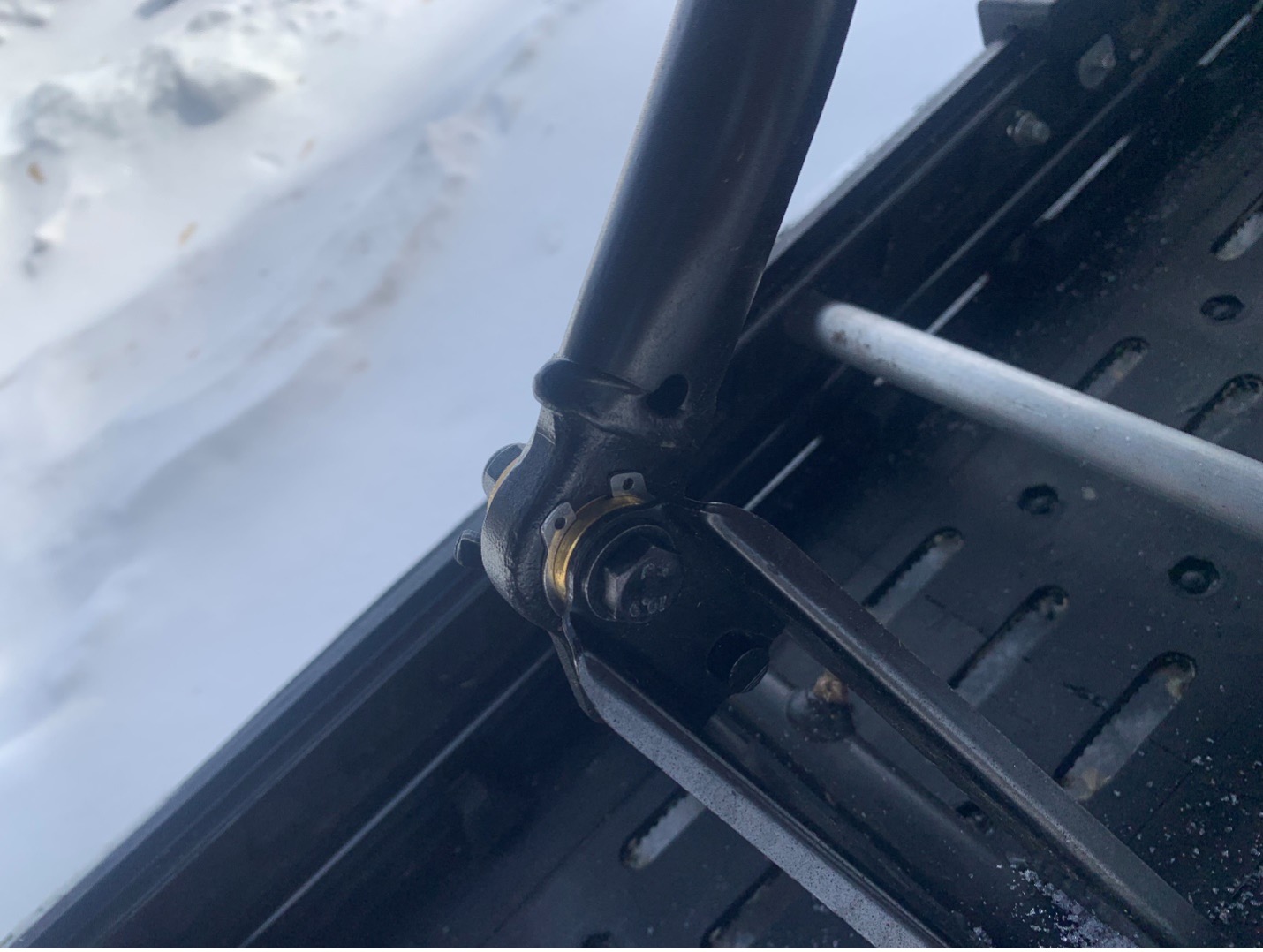
The X-RS, on the other hand, felt unbalanced. During a trailside conversation, our tech/mountain guy T.J. discovered the reason: The sway bar linkage on our demo had been installed incorrectly.
Luckily, over the course of the week and during another separate ride event a week earlier, we were able to spend all sorts of time on Ski-Doo MXZs and know their handling prowess well. With the new RAX RX/Pilot RX design, MXZs hold their line impressively through turns. They do, though, require extra steering effort from the rider compared to competitive designs.
We didn’t encounter any big, nasty trail moguls during our test ride, but a little play time in an ungroomed powerline cut reassured us that the X-RS’s high-end, big-bore KYB Pro 40 EA-3 shocks and the firmer feel of the reinforced rails, skid and running boards made it more at home when participating in such buffoonery. The X-RS’s longer, 137-inch shoe also allowed it track straighter when going WFO through the moguls than the Blizzard’s 129-inch setup, which wandered a bit.
It does seem to us like X-RS customers might want more clicker choices than are offered by the EA-3 shock design, but the shocks worked well overall.
The Blizzard package MXZ features similar but smaller-bore 36mm KYB Pro EA-3 shocks above the skis and on the skid’s rear arm, with a non-adjustable KYB 36 Plus on the front arm.
More than anything, though, time on both Ski-Doos in various regular trail conditions reiterated our long-running assertion that the rMotion rear suspension – in whatever generation – is still the benchmark when absorbing trail chop. Polaris designs have narrowed the gap, but nothing isolates the rider like the current rMotion X.
One feature separating these machines is the brake. The X-RS gets the four-piston Brembo and a shorter, adjustable brake handle, whereas the Adrenaline with Blizzard Package comes with the two-piston caliper and traditional brake lever. We wish both were more positive, but the X-RS design is an iota more grippy and less prone to heat fading in heavy use.
The Ski-Doos continue to shine with their quality fit, finish and attention to detail. Polaris still has the Ski-Doos beat in the gauge and most specifically the on-screen mapping, but the X-RS’s 10.25-inch touchscreen is mighty impressive. Its new Group Ride function is very effective at helping you keep an eye on folks in your riding party, and the BRP Go! mapping is getting closer to the high benchmark set by Polaris.
The Blizzard’s 7.2-inch digital display is easy to read and functional, but this aspect of snowmobiling is quickly evolving past it.
In Conclusion…
We tried to separate these two sleds as much as possible, and having the different track lengths helped. That said, a buyer could buy an X-RS with a 129-inch shoe or a Blizzard with a 137-inch track to negate that distinction. Wind protection also varies, though that’s easily addressed through the accessory catalog.
Beyond the track length, though, the differences are subtle. For hyper-aggressive riders who may bend suspension rails or running boards with big launches and hard landings, the X-RS reinforcements and bigger-bore shocks are worth the cost. And there’s no denying the status associated with riding an X-RS as well.
The other big separating factors, though, are these:
• The availability of the 10.25-inch gauge with mapping, connectivity and group ride (a $1,300 upgrade) on the X-RS is a big deal.
• Similarly, the ability to order self-adjusting Smart Shox (an $1,800 upgrade) on the X-RS could also be a primary factor.
“This is a really excellent sled,” one tester summarized about the MXZ Adrenaline with Blizzard Package. “It handles the trails very well, is forgiving and I love the new skis. I think it’s a pretty solid value with a good-enough gauge package plus excellent power, suspension and handling.”
Another wrote, “Many people will buy the X-RS merely because it’s the top-of-the-line sled and may never realize the differences in reinforcements, shocks and brakes,” he said. “That’s fine – nothing wrong with getting the best of the best! But the hyper aggressive rider will notice the differences, and the ability to get the better gauge, the self-adjusting Smart Shox and the taller lugged track has real value, too.”
Three Different Options From Polaris
850 Indy XC vs . 850 Indy VR1 with Dynamix vs . 9R Indy XCR
While other brands tend to structure their trail-focused snowmobile lineups with “good, better and best” tiers, Polaris has very carefully (and somewhat forcefully) tried to portray two trail machines as being co-flagships.
The Indy VR1 and the Indy XCR both feature premium components and premium price tags. They’re both targeted at the most particular and often aggressive customers. Yet they are quite different from one another.
Beneath them on the Polaris hierarchy is an Indy XC, and we were fortunate enough to spend time on all three models at the 2026 Rode Reports snowmobile testing event.
As with Ski-Doo, let’s start by outlining the naturally aspirated big-bore options from Polaris. All three options start with the Matryx chassis platform and include Race IFS Matryx front suspension and versions of the Pro-CC rear suspension.
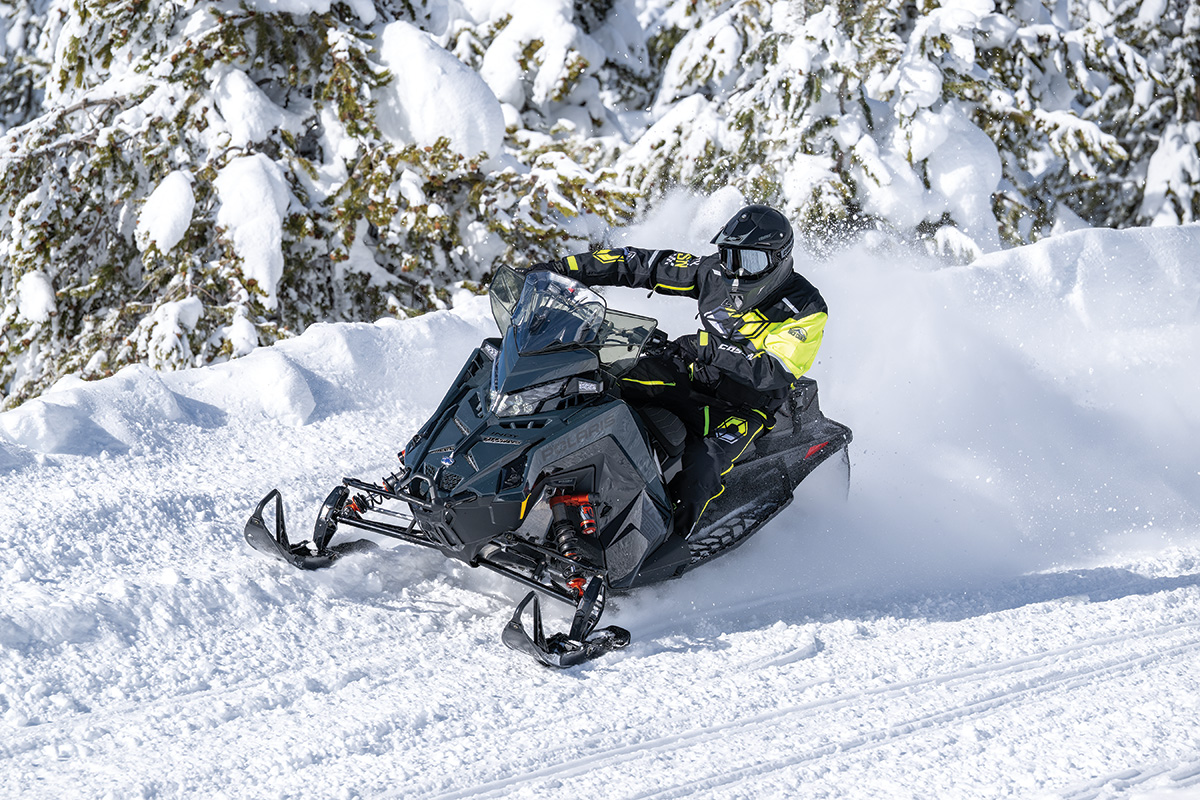
The baseline Indy XC is hardly a stripped-down model. The demo in our test featured the stout 850 Patriot twin, a 137-inch Cobra track spinning 1.35-inch lugs and adjustable Fox QS-3 shocks at all four positions. With the easy-to-read Message Center display, it’s priced at $16,499. It can also be upgraded to include the 7S display – with best-in-sport on-screen mapping and other enhanced functionality – which bumps its MSRP to $17,648.
The 850 Indy VR1 is the next natural step up the ladder because it features the same engine package. It benefits, though, from Walker Evans Velocity clicker shocks above the Pro Steer skis and on the Pro-CC skid’s rear arm. The VR1 also comes standard with the high-function 7S display and NightBlade projector beam headlights, and a buyer’s choice of three different tracks. Outfitted with a 137-inch Ice Ripper, its retail price is $18,499.
There is, though, another important step within VR1 world: the availability of the Dynamix suspension system that uses an on-board IMU to instantaneously self-adjust shock damping for changing trail conditions and optimal handling. The system is rather incredible, though a Dynamix-equipped VR1 retails for $20,598.
The 9R Indy XCR (MSRP: $19,647 as tested) is the other option for those seeking a Polaris big bore, but it varies quite dramatically from the others. Its shockingly crisp 9R engine is based on the 850 Patriot, but with a lightweight, low-inertia crankshaft and flywheel; larger bore cylinders with unique porting; ceramic-coated pistons; and an upgraded exhaust system.
Beyond the powertrain, the Indy XCR package has traditionally included a plethora of upgrades for the sport’s most aggressive drivers, including reinforced rear suspension parts like the rail beams and pull rods, a chromoly front torque arm, a four-wheel rear axle and double limiter straps. Suspension is handled by larger-bore Walker Evans Velocity piggyback shocks with beefy 5/8-inch shafts. It also has Pro-Taper handlebars and a more aggressive racing brake.
For 2026, the Indy XC and both VR1 return essentially unchanged. The Indy XCR, however, gets new Long-Tail geometry on its Pro-CC rear suspension plus new springs and shock setting to firm up its ride, further honing its big bump focus. (For details on the Long-Tail geometry, see page 34.)
The Ride
We logged quality seat time on all three Polaris big-bore trail burners over two days at the Rode Reports test event. Based on our own previous experience and Polaris’ stated positioning, they each fell into their slots as expected. The only real surprise was how dramatically the Indy XCR changed with its new rear suspension geometry and calibrations.
The Indy XC, Indy VR1 and Indy XCR all come in the latest version of the Matryx chassis, which offers an ergonomically sound layout that places riders of just about any size in exactly the right position. From our shortest test rider to our tallest, and smallest to largest, everybody on our team raves about the Polaris layout. The rider is perched on a relatively firm and right-sized seat with handlebars and running boards positioned so they put major joints (shoulder, elbows, knees and hips) at the proper angles, whether you’re in attack mode or merely cruising.
That seat allows easy fore-aft and side-to-side movement to influence the sled’s handling, and side panels are well shaped to allow a rider to shift a knee forward in turns.
Nothing in life is perfect for everybody, however. Some riders in our team annually complain about the angle of the rear-facing body panels where they meet the rider’s shin, and that hasn’t changed. Others noted how the handlebar can get jammed into the rider’s chest when ripping aggressively through tight corners.
Handlebars are an interesting area of differentiation. The Indy XCR has a stiffer, more durable Pro-Taper handlebar than the other two machines, and its bar ends have a more dramatic hook, giving a more squared edge to hang onto when seriously slinging through turns.
The brakes differ as well. The XC and VR1 share what Polaris calls its Matryx Stealth brake setup. When compared to competitive brands, the Hayes damper feels like a rather firm/grabby brake – until you jump on an Indy XCR and practically throw yourself through the windshield on their first grab! The XCR’s Matryx Race Radial brake is super quick to lock up the track and hyper aggressive. It’s a positive feel that our test team loves – after we recalibrate ourselves after the first couple of turns.
The suspension specs look similar on paper, with the Matryx Front Suspension (also known as the Polaris Race IFS) moving through 9.5 inches of travel above Pro-Steer skis up front, and a Pro-CC rear suspension traveling up to 16.2 inches when paired with a 137-inch long track.
A deeper dig and some seat time, however, tell the rest of the story.
The 850 Indy XC did just fine, motoring down the trail with poise, predictably absorbing most trail anomalies with its three-position QS3 shocks. With the front clickers in position two/medium, body roll was minimal and we could make swift time on a weaving trail.
“The Indy XC’s handing felt supreme after getting off another model,” a tester said. “Ski-Doo has certainly closed the gap, but the Polaris front end held its line through turns very well. Yes, I thought the XC was great, until I got on the VR1 with Dynamix. It’s at another level.”
The VR1 Dynamix wows us with its ability to control body roll and give the rider the exact feel they need to predictably zip through turns at various speeds in changing conditions. Particularly when in the Rally mode, a rider could lean less and carry more speed while being in more control. It was amazing.
In the bumps, though, the story was more mixed. Even with the Dynamix system performing its magic, the Polaris Pro-CC rear suspension is still not on par with a well-tuned rMotion from Ski-Doo. In fact, in some conditions, some test riders said they preferred the Indy XC’s rear suspension with QS3s, which offered a more natural feel than the high-end, Fox-based Dynamix setup.
While the Dynamix-based VR1 impressed us with its incredible handling, the Indy XCR blew us away with its fun factor. The claimed benefits offered by the Long-Tail geometry on the Pro-CC suspension are real.
When charging through off-trail mogul fields, the longer torsion springs and firmer overall setting found on the XCR paid big dividends. The suspension bottomed far less frequently, held its line better/tracked straighter and kept the rider in better control.
Then, even without changing the settings, that same sled handled quite well and didn’t feel harsh when we zipped it down a weaving trail. The front end didn’t stay as expertly planted as a Dynamix VR1, but it held its line confidently.
“For a big bump sled, it’s amazingly capable even in small stutters,” a tester noted. “The first 20 to 30 percent of the travel is not harsh like has typically been the case in big-bump-focused sleds.”
Beyond that, the roughly 170-horsepower 9R engine’s torquey feel is intoxicating. Whether coming off a rolling start or even when going 70 MPH and giving the throttle a stab toward the handlebar, the response (and the resulting thrill) is immediate, making it ridiculously playful.
“I would normally say the 650 is all I would ever need, but the 9R delivers such linear and controllable power,” a tester wrote. “Plus there aren’t any of the negatives normally associated with a big bore such as extra weight, sacrificed handling or vibration.”
“I guess the only real negative is the price,” another test rider countered.
In Conclusion…
The differentiation between the three Polaris models is actually quite easy to draw out.
Folks looking for a very capable trail sled without taking out a second mortgage would likely be very happy with the 850 Indy XC. It’s got strong power, very good handling, top-notch ergos and a decent rear suspension with quality shocks.
High-mile trail riders or handling purists should be drawn to an 850 Indy VR1 with the Dynamix system. It builds on everything the XC offers, with razor-sharp handling and all the functionality of the 7S display.
True hard-chargers who love to pick up the skis and who seek the biggest, nastiest bumps and worry about the landing later will love the new 9R Indy XCR. It’s ready for punishment yet it’s still trail friendly.
The New Arctic Cat ’ s 858 Options
Arctic Cat’s loyal legion of fans waited a long time for the Catalyst chassis, which finally launched for model year 2024. They then had to wait another year for a big-bore engine to fit the compact platform for 2025.
However, once the new chassis and 858 engine combo were unveiled – along with a high-end touchscreen display – the next big concern was whether it would be a one-hit wonder.
The past year brought plenty of turmoil to Arctic Cat world. Textron’s desire to exit the powersports world rattled not only Cat fans but most snowmobilers, and rumors swirled about whether the once-proud brand even had a future.
Thankfully, as you’ll see in our story on page 12, the brand is most definitely back, but its future wasn’t solidified until late spring. That meant no pre-production 2026 Arctic Cat snowmobiles were built for anybody outside the factory to test ride.
Still, four trail-focused models will carry Arctic Cat 858 engine in the brand’s late-announced 2026 lineup. Three are familiar, and we were fortunate enough to get a sneak peek of the fourth when we briefly rode a prototype ZR 858 equipped with electronic power steering in the spring of 2024.
Cat’s 858 Options
Frankly, we were surprised to see how many models the new Arctic Cat included in its 2026 lineup given its late start. Well-placed sources suggest that total production may be limited, but buyers will have choices.
All models featuring the second-year 858cc two-stroke twin will come in the now third-year Catalyst chassis. Its lightweight design, centered masses and narrow cockpit attracted rave reviews from our team testing them in model years 2024 and 2025.
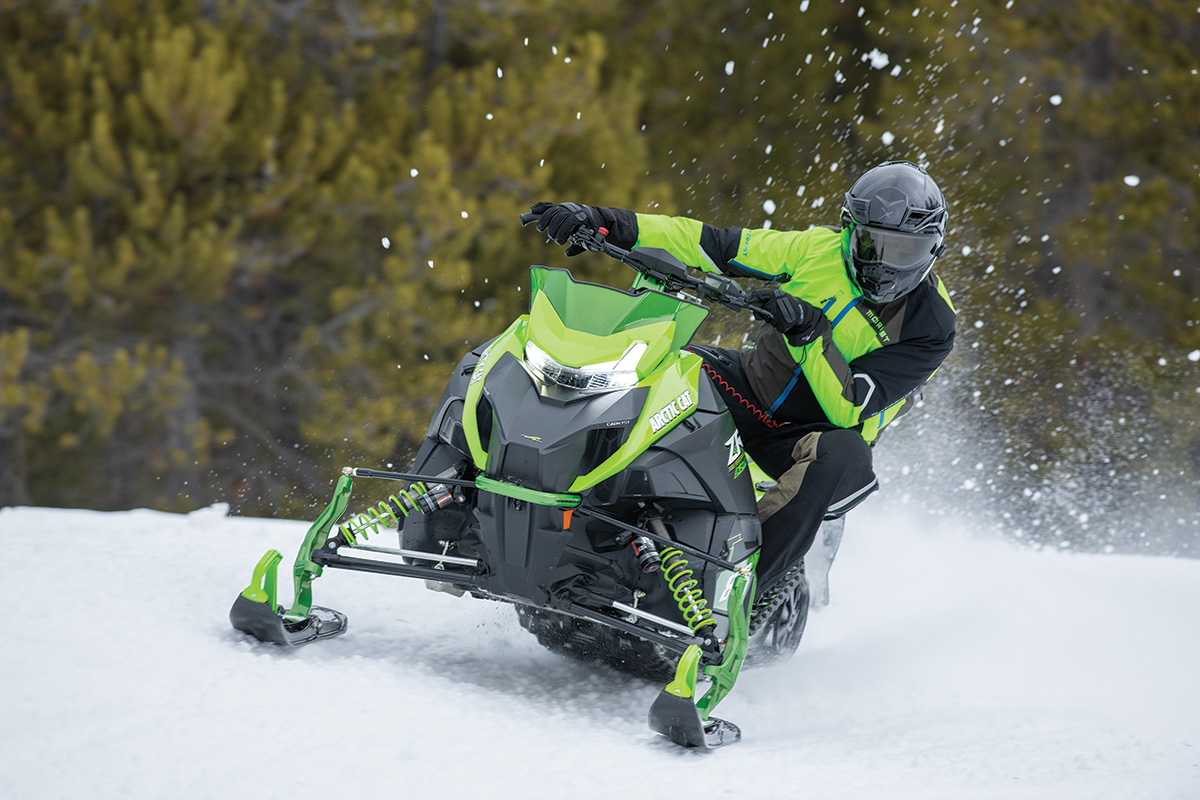
The 2026, the ZR 858 Sno Pro serves as the new baseline. It comes with mid-level, five-position AC5S shocks on the Slide-Action rear and AWS 42 front suspension, plus either a 129- or 137-inch track. New for 2026, a Sno Pro buyer can upgrade from the basic Sport gauge to the high-tech, multi-functional G8 digital display with on-screen mapping.
One step up is the ZR 858 ATAC, with driver-controlled, adjust-on-the-fly Fox iQS3 shocks on the front suspension and the rear arm. The ATAC package includes the bright G8 touchscreen.
The ZR 858 R-XC is a sidestep up the aggression ladder. Aimed at cross-country racers and hard-charging super enthusiasts, the R-XC package has larger bore QS3R Fox dampers, its own unique rear suspension geometry, some durability upgrades and fully-clipped 15- by 137- by 1.352-inch Cobra track.
The big buzz, though, is about the all-new Arctic Cat EXT Special. Its classic name and throwback purple-and-black color scheme hide its modern approach. It is the first two-stroke snowmobile to feature electric-assist power steering, which not only reduces the required steering effort, it also damps negative feedback that normally comes back through the handlebar.
The light-steering EPS benefits also enabled designers to bolt on aggressive C&A Pro XPT skis. A pre-studded track was also added. The steering system was also altered to allow the rider to get more turn of the skis with less handlebar movement.
On top of all that, the EXT gets driver-controlled Fox iQS3 shocks in all four positions for 2026. Previous iQS setups only allowed control over the front suspension plus the rear arm.
The Ride
As stated, we didn’t get to ride any 2026 Cats, but we did spend quality time on 2025 models.
Overall, our team was impressed with the Catalyst chassis’ lightweight feel, quick handling and minimalist ergos. The roughly 160 HP 858 engine on 2025 models was a strong, class competitive performer, though some test models seemed stronger off the bottom end than others.
Furthermore, many of the nits our team picked are being addressed for 2026. Cat designers say they reduced the vibration found on 2025 models with a revised engine mount system featuring different durometer lower mounts plus a reorientated mount on the engine’s chaincase side.
Also, the exclusive Torque Control Link (TCL) that fits behind the clutches will be made of a special long-fiber carbon material that reduces vibration while also stripping 2 pounds from the vehicle. Updated fuel, ignition and oil calibration will also improve overall run quality, Cat officials claimed. Other refinements include new airbox sealing methods and a more robust snowflap mount.
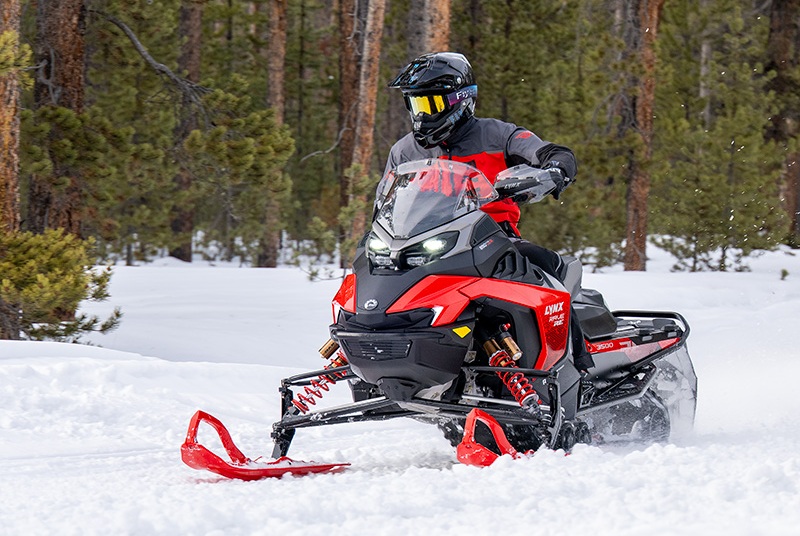
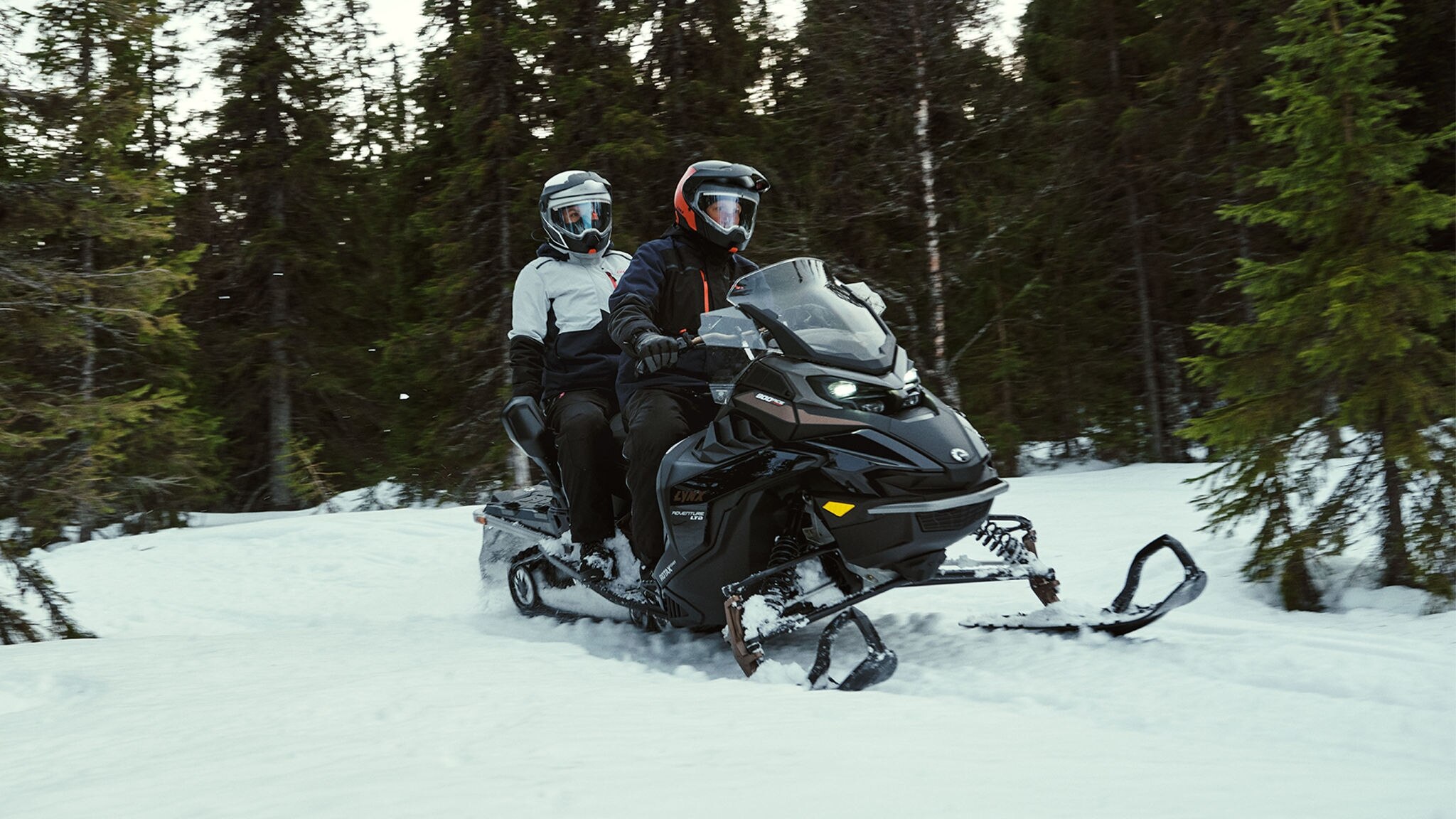
Lynx Rave RE 850 E-TEC
In the naturally aspirated big bore trail class, Lynx made some of the biggest year-over-year changes, which makes it a real shame that we didn’t get to test a 2026 Lynx Rave RE 850 E-TEC back-to-back against the other sleds in this test.
Fortunately, we logged plenty of miles with Rave RE models with other powerplants, including the Rave RE 850 E-TEC Turbo R on a different day (look for that review in our December issue). That gives us enough insight to provide details and general impressions here.
The Evolution Of The Species
Model year 2026 will be the fifth season that the Rave RE will be the go-to model for most flatlanders eyeing a Lynx snowmobile.
First introduced for model year 2022 as a rough-and-ready hard-charging option – and most definitely not just a red Ski-Doo – the Rave RE was just lightly massaged for 2023 with reinforced rear suspension rails.
The bigger leap came in 2024, when it moved to the Radien2 platform (Lynx’s equivalent of the REV Gen5). That brought revised ergonomics, a new seat, improved lighting and the option of a 10.25-inch touchscreen display. Riders also received less negative feedback, thanks to a fourth engine mount to damp vibrations plus sound-deadening material in the side panels.
Model year 2025 brought the Ice Ripper XT track with 1.5-inch studded lugs, plus more trail-friendly suspension calibrations.
Now for 2026, a bigger jump in handling is promised by the LFS+ front suspension geometry – Lynx’s equivalent to the Sk-Doo RAS RX front suspension geometry introduced in 2025. It features taller spindles that position the upper A-arms 1 inch higher plus lower A-arms mounted 11mm higher than before. The sway bar linkage was also altered, and the stout KYBs are more tilted.
According to BRP designers, the changes cut body roll by 20 percent and provide sharper handling, with the inside ski staying closer to the ground in turns.
The Ride
Since there was not a Lynx Rave RE 850 E-TEC at the Rode Reports, comparing this sled directly to the others in this test would be unfair.
However, we did ride the closely related – though heavier and more powerful – Lynx Rave RE 850 E-TEC Turbo R at the event, which shares the same updates as the N/A 850 model. We’ll save most of our evaluation notes for our Turbo Trail Gunners story in the December issue, but will share some overview thoughts here.
The front end changes made to the boosted Rave RE could certainly be felt during our trail ride with the machine, but they didn’t change the machine’s character. Whether that’s good or bad depends on the buyer’s perspective.
On so-equipped Ski-Doo models, our reviewers have praised the new geometry for the resulting flat cornering and limited roll in corners, especially when paired with the RAS RX skis.
But Lynx Rave RE models keep the quick-transferring PPS3 uncoupled rear suspension and rider positioning that keeps the pilot deeper in the cockpit. Together, those traits keep the skis in the air or at least unweighted a lot when riding in an aggressive mode. Plus, side-to-side body roll wasn’t much of a concern on the stiffly sprung Rave.
When the assertive, deep-keel Blade skis do plant on a Lynx Rave, they do so with gusto, making steering heavy and handling less predictable than a comparable Ski-Doo.
Before we sound overly critical, we should note that the new front end does improve the Rave’s handling. Combined with other suspension adjustments made in previous years, the 2026 model we rode was the most trail-friendly version of the Lynx Rave built yet. But it’s still a purpose-built machine that much prefers jumping and attacking big bumps rather than carving through endless miles of twisties.
If your ideal of a perfect ride involves razor-sharp handling on groomed trials, the Rave RE still probably isn’t your ideal match. But if you live for high-flying moments, big mogul mashing and carrying the skis high, the sturdy build and ultra-capable shocks make the Lynx a formidable choice.