A dead or damaged battery is one of the fastest ways to ruin your first ride of the season. Whether your snowmobile is a high-performance trail sled or a utility machine, proper battery care over the off-season is critical. This guide breaks down what you should do, and what to avoid, to ensure your battery stays healthy all summer.
Types of Batteries in Snowmobiles
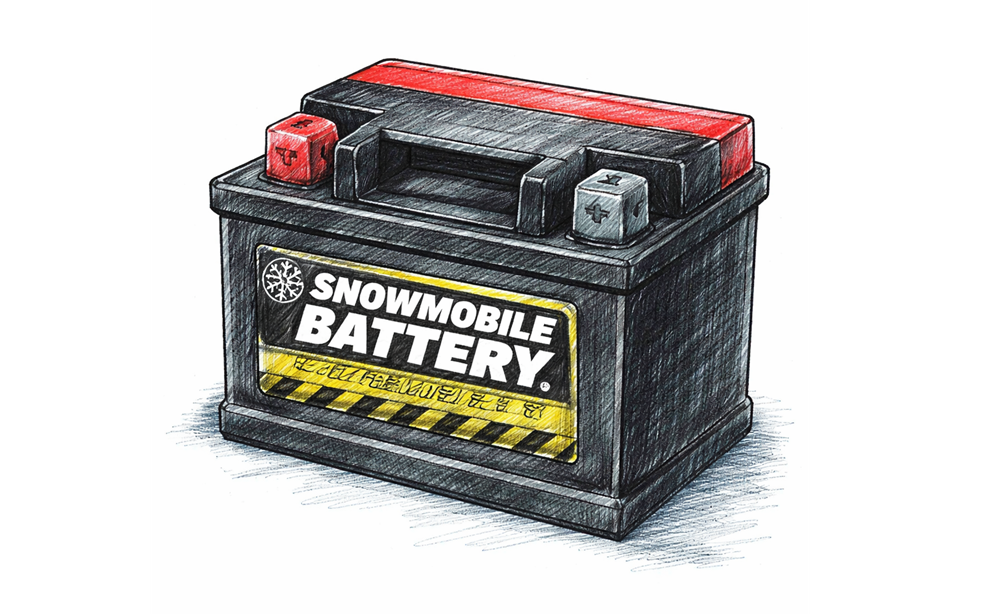
Not all snowmobiles have batteries. Some older or simpler models, especially certain 2-stroke sleds, can be started with a pull rope or recoil starter and may not have an onboard battery at all. However, many modern snowmobiles rely on a battery to power the electric start, lights, and other electronics. These batteries typically fall into one of three types.
Conventional lead-acid (flooded) batteries are older-style units that contain liquid electrolyte. They are heavier, require occasional topping off with distilled water, can lose charge faster, and are more sensitive to temperature extremes.
AGM (Absorbent Glass Mat) batteries are sealed lead-acid batteries with the electrolyte absorbed into glass mats. They are maintenance-free, spill-proof, more vibration-resistant, hold a charge longer than conventional lead-acid batteries, and are common in modern sleds.
Lithium-ion batteries are lightweight and compact, delivering high cranking power with very low self-discharge. They require specific chargers and careful handling to avoid over or undercharging and are often used in performance sleds where saving weight is a priority.
Knowing which type of battery your snowmobile has is important because it determines how you store, maintain, and protect it during the off-season.
Why Summer Storage Matters
Batteries naturally lose charge over time, and leaving them unused for months without proper care can lead to several problems. In lead-acid batteries, sulfation can occur, where sulfate crystals form on the plates and reduce both capacity and overall lifespan.
Allowing a battery to sit completely dead for extended periods can cause permanent capacity loss, potentially destroying it. Additionally, terminals can develop corrosion, which reduces connection quality and can make starting your sled difficult. Taking the right steps during summer storage helps prevent these issues and ensures your battery delivers full power when winter arrives.
Disconnect Before Charging
Always disconnect the battery from your snowmobile before connecting it to a tender or trickle charger. Start by removing the negative terminal first, followed by the positive, to reduce the risk of short circuits or sparks. Once disconnected, check the terminals and clean them with a wire brush to remove any corrosion that could interfere with charging or starting.
If possible, remove the battery entirely from the sled and store it in a cool, dry location. This not only reduces vibration stress on the battery while it’s idle, but also protects it from excessive heat, which can accelerate self-discharge and damage internal components. This is especially important for AGM and lithium batteries, which are more sensitive to heat and should never be left in a hot garage for the entire summer.
Using a Battery Tender or Maintainer
A battery tender (also called a trickle charger or smart charger) keeps your battery at an optimal charge without overcharging it. Unlike standard chargers, tenders monitor voltage and current and only supply enough power to maintain the battery.
Smart chargers automatically switch to float mode once the battery is fully charged, maintaining the correct voltage without overcharging. Trickle chargers, on the other hand, supply a constant, low amperage, which is safe for long-term storage but may not adjust automatically. Using a battery charger, whether smart or trickle, helps prevent sulfation, loss of capacity, and complete discharge during months of inactivity, keeping the battery ready for the next season.
Some advanced chargers can even monitor battery health and perform desulfation cycles to extend life, which is especially helpful for older lead-acid batteries.
Additional Summer Maintenance Tips
- Keep it cool and dry: Avoid storing the battery near heaters, direct sunlight, or damp areas. Temperature extremes accelerate self-discharge and chemical degradation.
- Check periodically: Even on a charger, it’s good practice to inspect the battery once a month, ensuring voltage is stable and terminals remain clean.
- Top off liquid batteries: If you have a flooded lead-acid battery, check electrolyte levels and add distilled water as needed. Never overfill.
- Terminal protection: Apply a thin layer of dielectric grease on terminals to reduce corrosion.
- Avoid deep discharges: Never let your battery sit completely dead. A partially charged battery will recover better.
Worry Free Summer
Proper battery maintenance isn’t complicated, but it is essential. Disconnect the battery, clean and inspect it, and store it in a cool, dry place on a battery charger. Check it periodically, protect terminals, and know your battery type to ensure the correct care. Doing this over the summer protects your investment, avoids frustrating first rides, and extends the life of your battery so your sled is ready to go when the snow flies.