We all have our dream snowmobile trips. And, if we’re lucky, they can sometimes come true. It happened for me when I finally set foot on the island of Svalbard, nearly 30 years after a fortuitous meeting at the Sno Baron’s Haydays.
In the late 1990s, I met a small contingent of wide-eyed Norwegians racing through the Haydays grounds in Columbus, Minnesota, trying to experience everything the event offered. They came all the way from the town of Longyearbyen, the northernmost human settlement in the world at 78 degrees north latitude. For comparison, the North Pole is at 90 degrees and Minneapolis, where I live, is at the 45th parallel. It’s also a place where the number of snowmobiles (about 3,000) outnumber the residents (about 2,600).
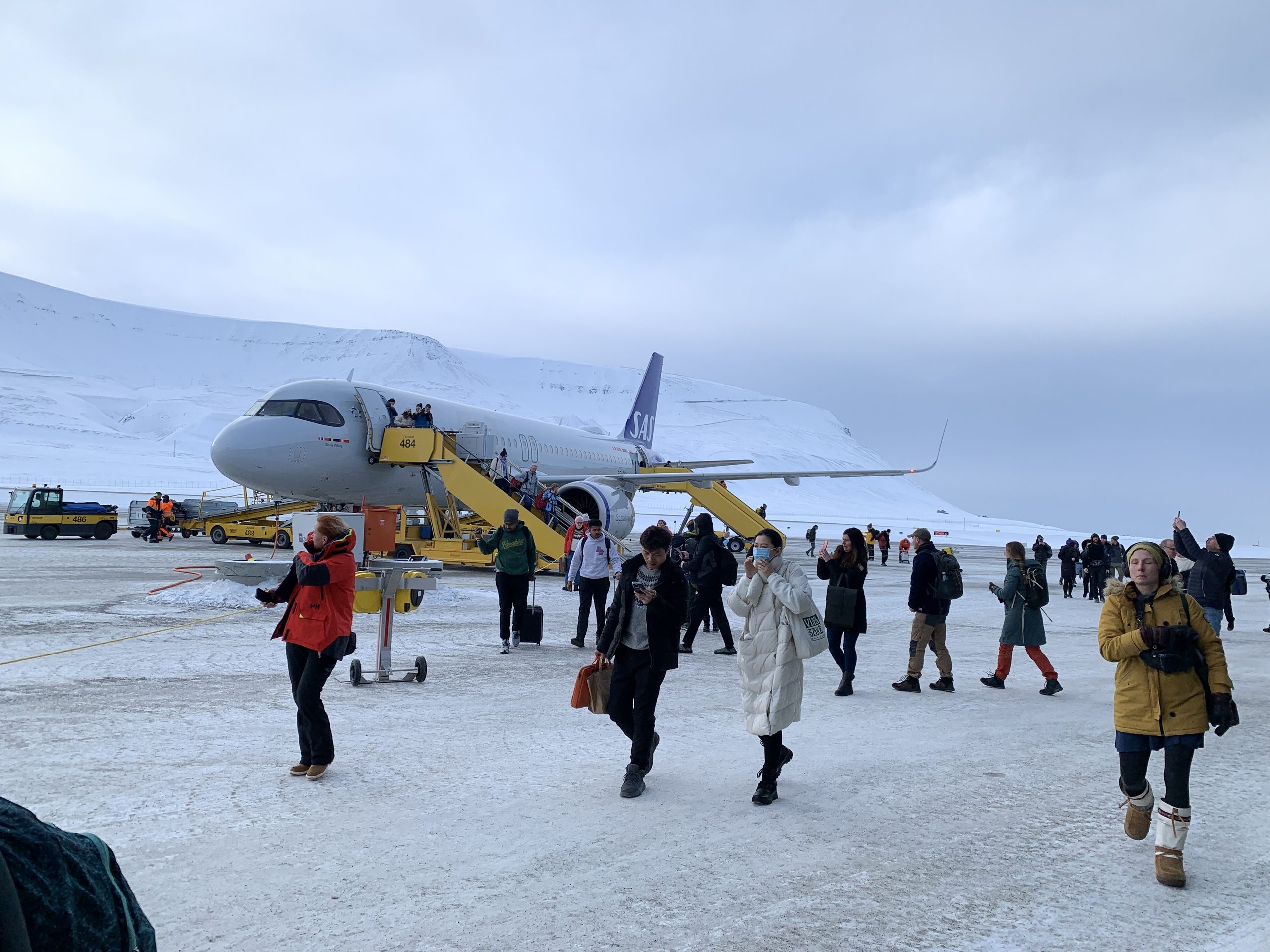
When I got off the plane in Longyearbyen on a sunny March day, the first person I met was Frank-Johnny Olsen, who I’d met at Haydays those many years ago. It pays off to have a dream and then remain in contact with the people who can make it happen.
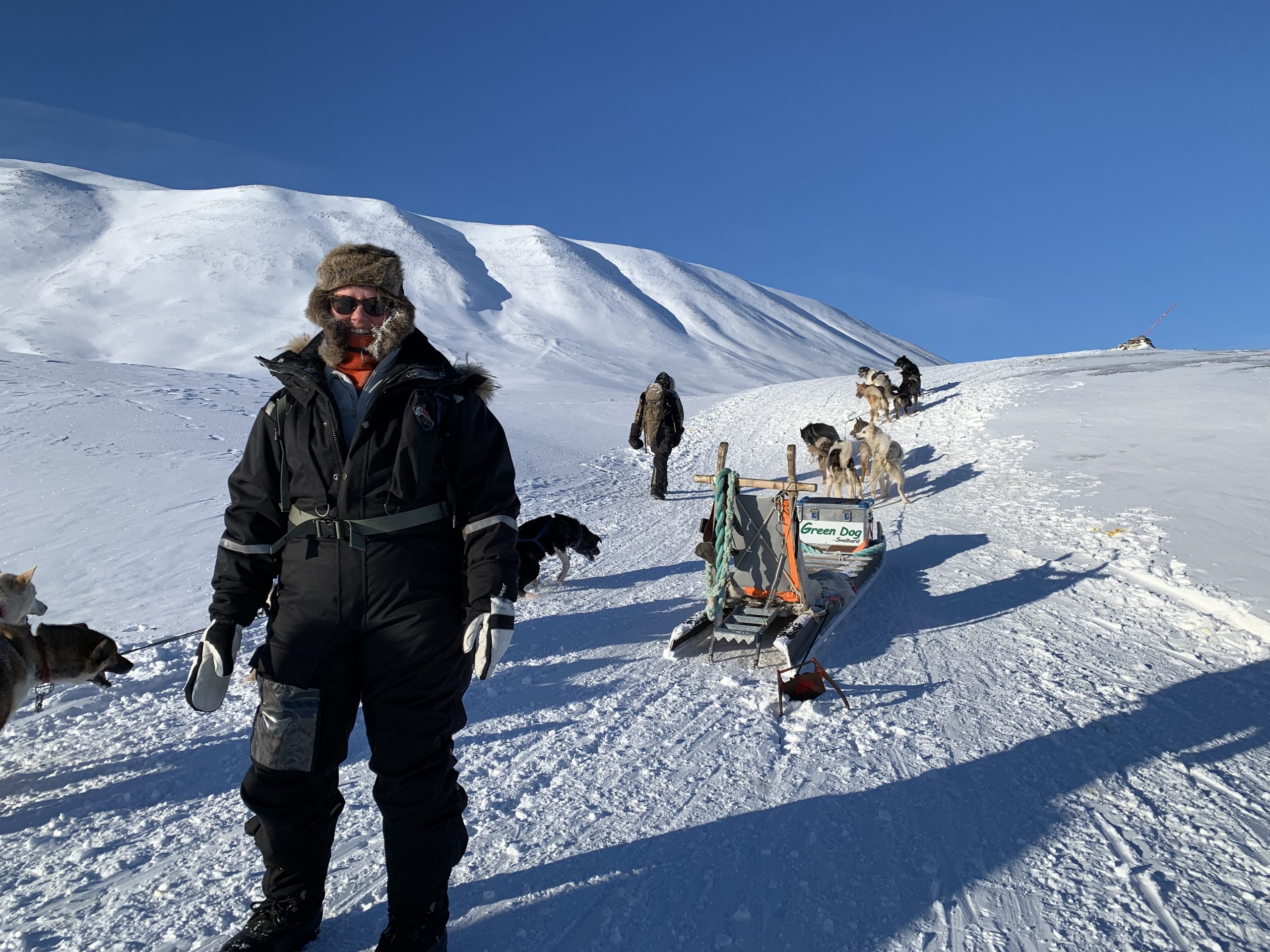
Over five days, I got the full Svalbard experience. I visited the coal mine on a tour led by his daughter-in-law. I went on a sled-dog expedition and played with husky puppies. I made trips to the requisite museums to learn the history and geology of the area. I drove past the World Seed Bank (no visitors allowed).
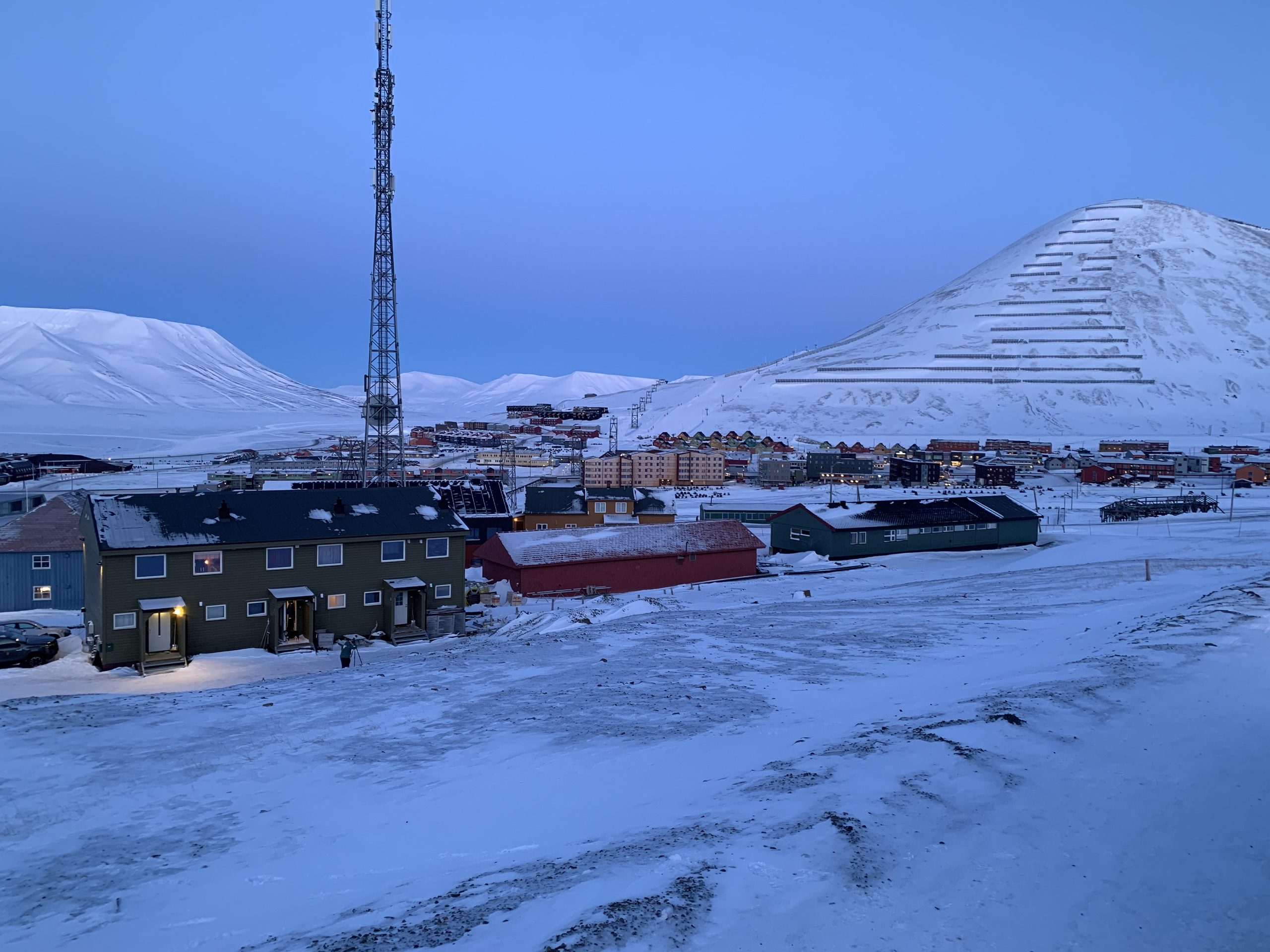
I enjoyed playing tourist, but I was really here to ride.
In some ways, it was a normal snowmobile excursion. Frank-Johnny and his family gassed up the sleds, and we packed our things to head to their cabin, about 35 miles south of town. Since the temps never cracked 0 degrees F the entire trip, they loaned me some heavy-duty gear, furry mittens, and a helmet.
That’s where “normal” ended.
In addition to packing, everyone but me was packing heat—and in some cases, multiple weapons in different locations. Polar bears are a real danger outside the Longyearbyen town limits. The law requires firearms or scare-flares. We had both.
We also each pulled a sledge carrying something vital to the weekend, things like heavy-duty food coolers, cabin supplies, and survival gear.
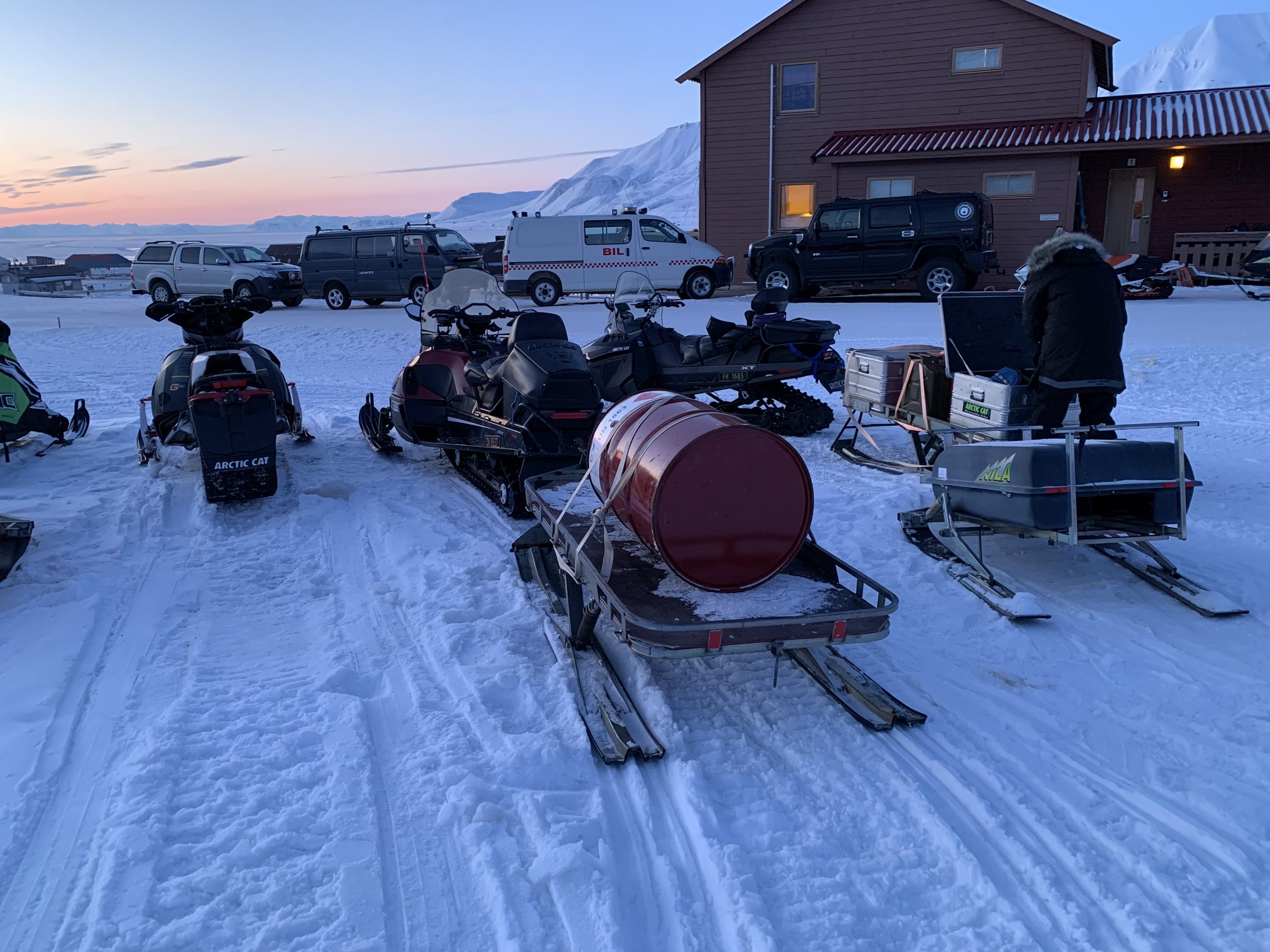
My Bearcat’s load was a huge, full fuel barrel for both the snowmobiles and for the cabin’s generator. I blamed the fuel weight when, not even out of sight of their house, I started spinning when driving up a steep, icy ditch. On the way back, I hauled the empty barrel.
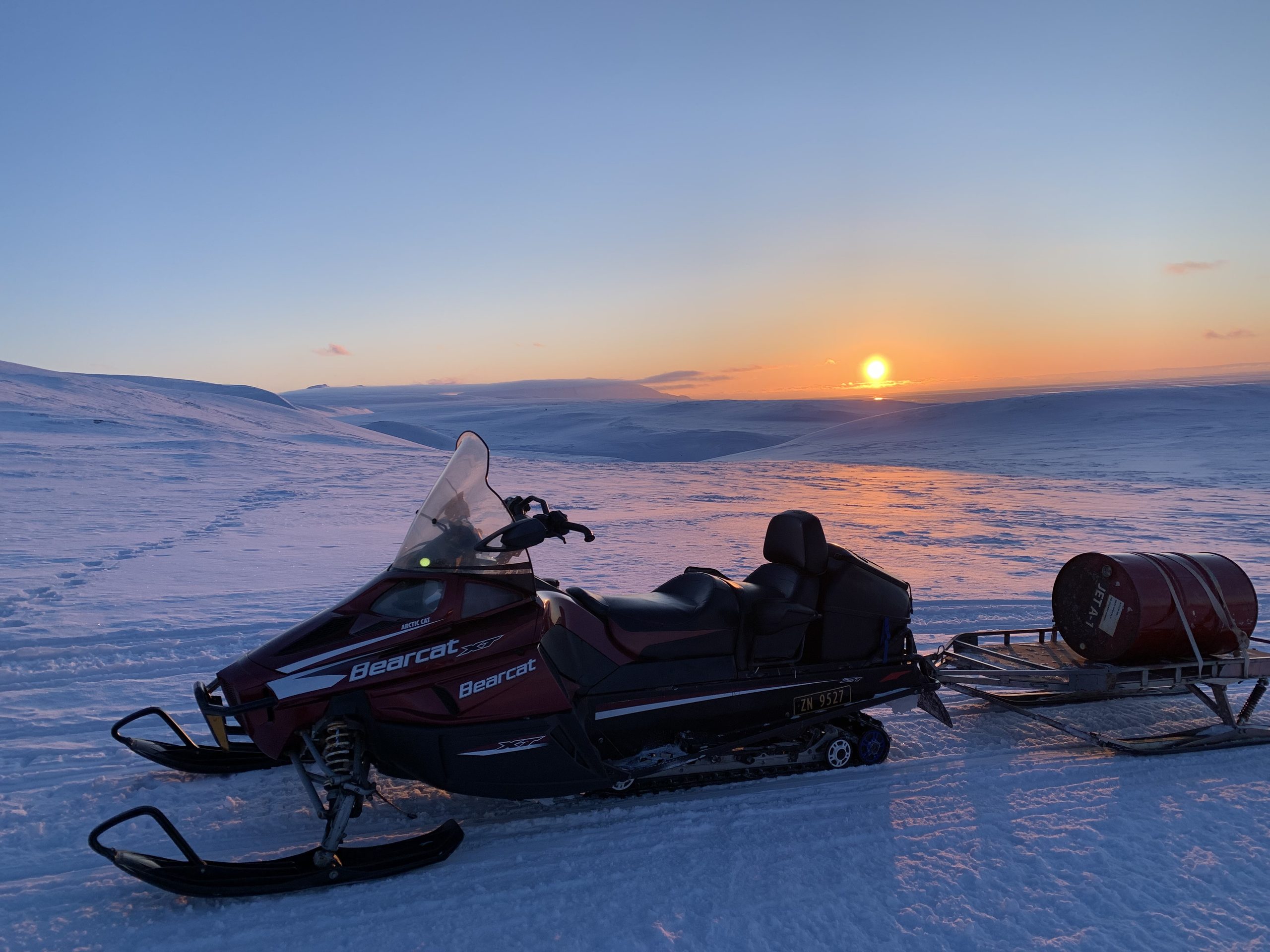
When I snowmobile, I often play out various scenarios in my head. What would I do if…I ran out of fuel…my machine broke down…I had to survive overnight… I’m fairly confident in my abilities, but as I ran through my options, I quickly realized that my usual tricks would not apply here. On the plus side, I had a fuel advantage, considering my cargo.
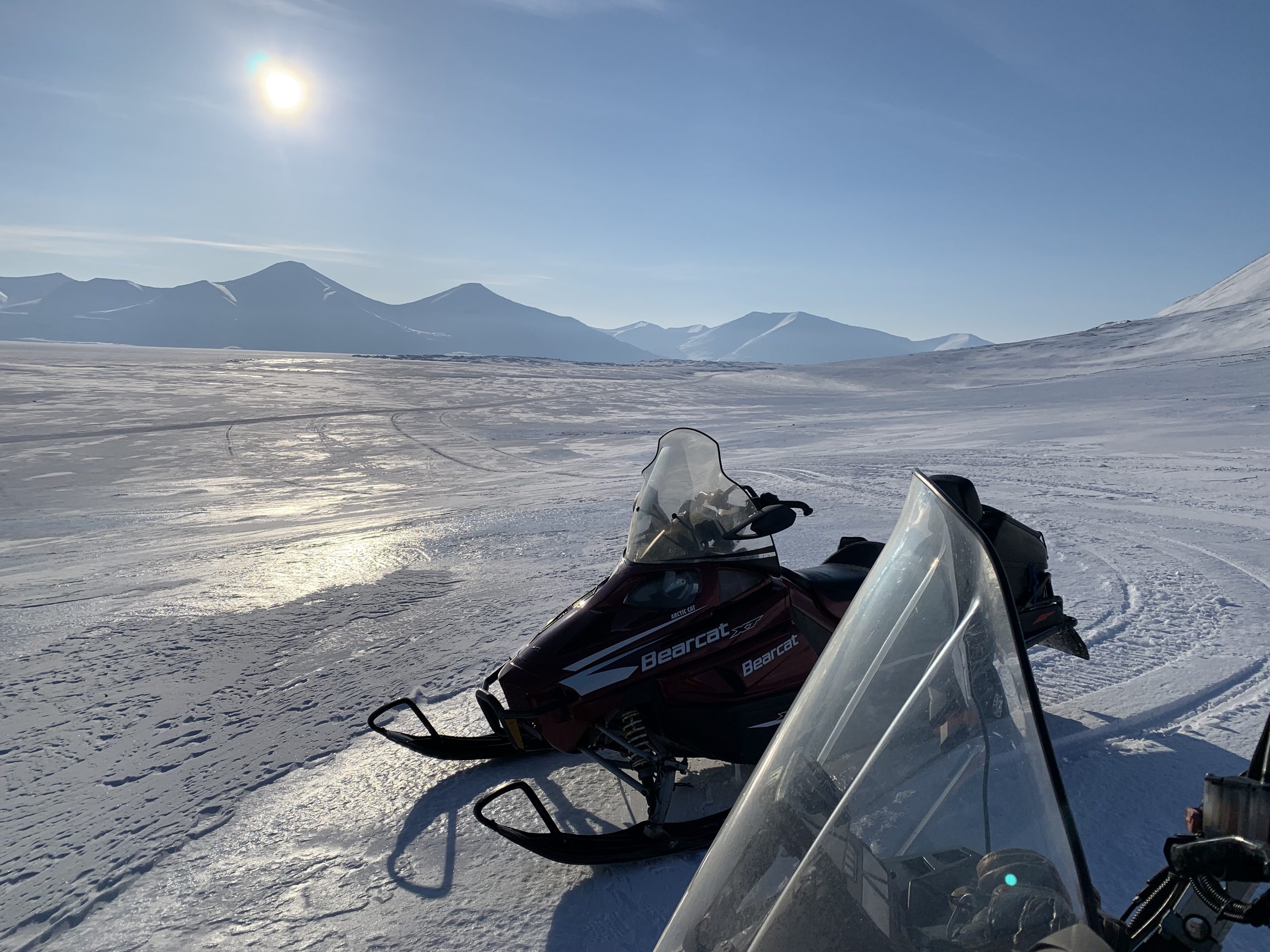
On the challenging side, it was dark, the trail wasn’t really a trail, and my lens was fogging. I had a GPS, but did I really know where I was going? My group was spreading out—who do I follow? (Answer: Frank-Johnny’s wife, Leila). If I break down, how do I find shelter and start a fire in a place devoid of trees? The terrain was flat, then steep and then it seemed like we were wiggling between huge drifts, only highlighted by our headlights. I was in a state of exhilarating panic.
Things were easier in the daylight, and once I understood the landscape a bit better, confidence grew. In fact, we indeed had a refueling stop far from any actual gas station.
I never figured out how to get a fire going, though.
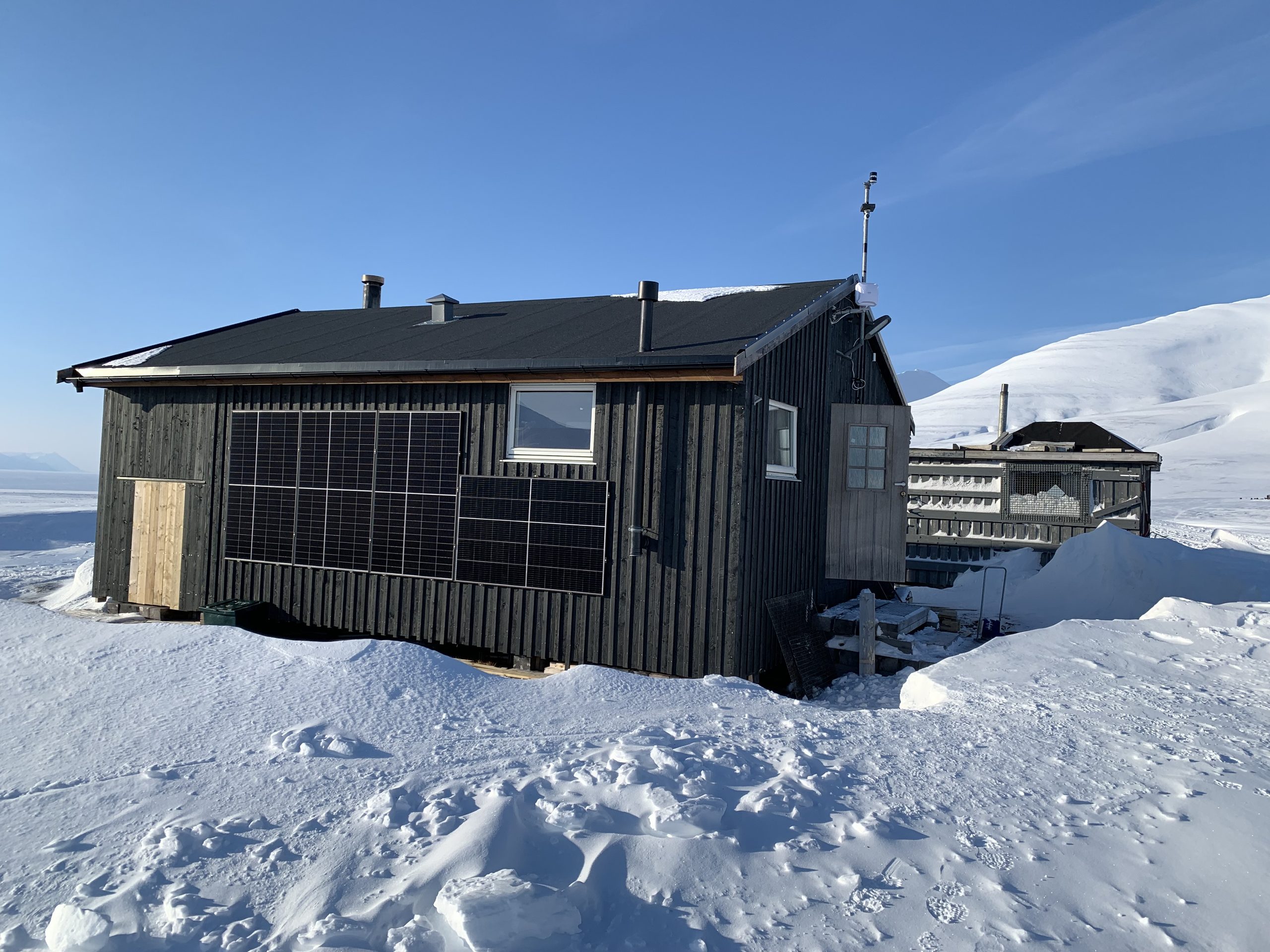
This small, cozy cabin is a glorified shelter from bears. Frank-Johnny has Plans A, B, C, and possibly even D and E for meeting up with a polar bear.
The cabin gets buttoned up when they’re not there, which includes drilling plywood or metal grates over the windows.
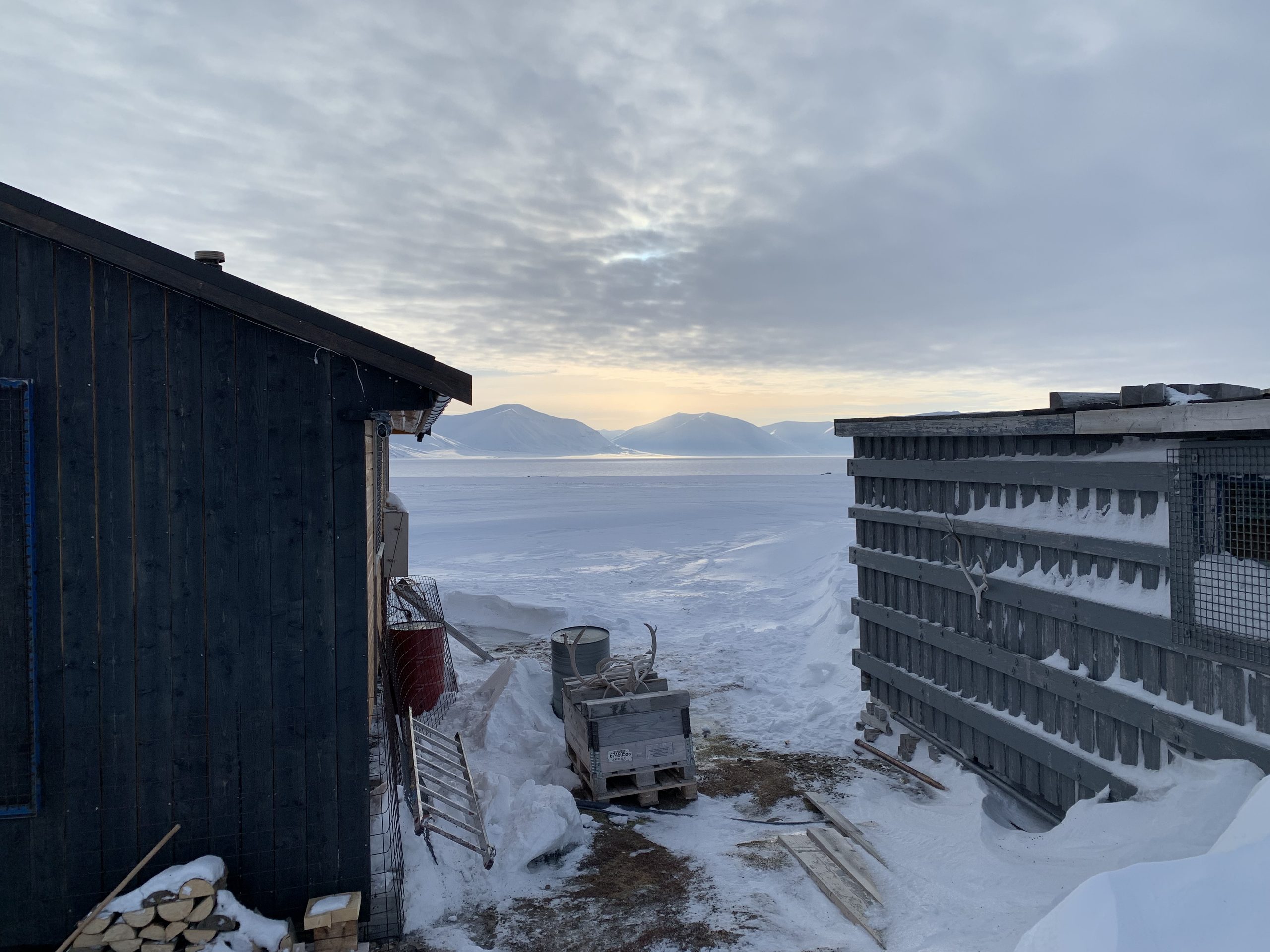
Should the cabin get breached, they have a back-up shelter: an old shipping container that also has some of the comforts of home—or at least comforts of survival. This container is just a few steps from the main cabin.
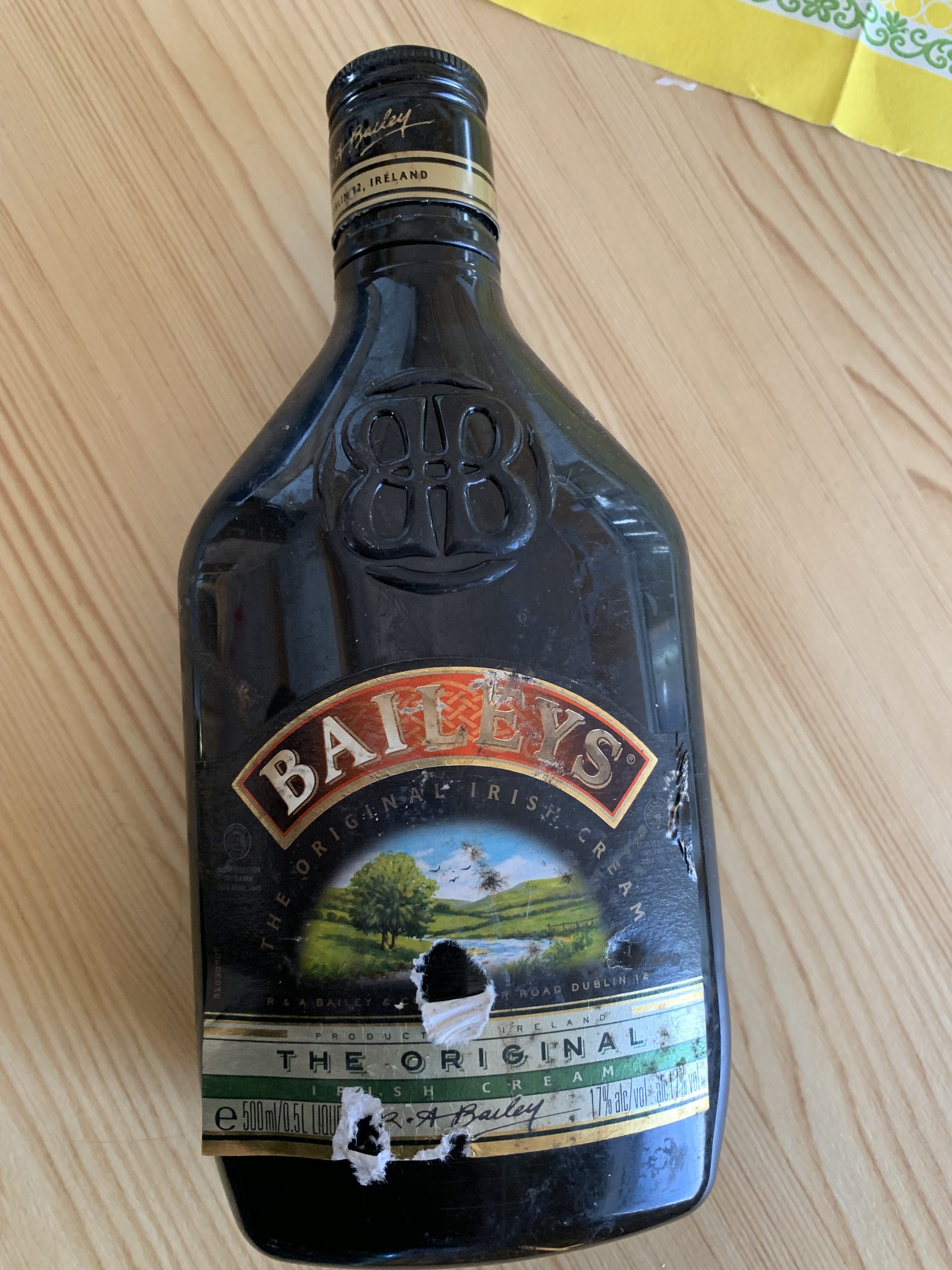
Why is this important? Because a third cabin, the original cabin on the site, was trashed by a bear the one time Frank-Johnny didn’t secure it as he should have. On a shelf, in the main cabin, is a bottle of Baileys with bear chew marks.
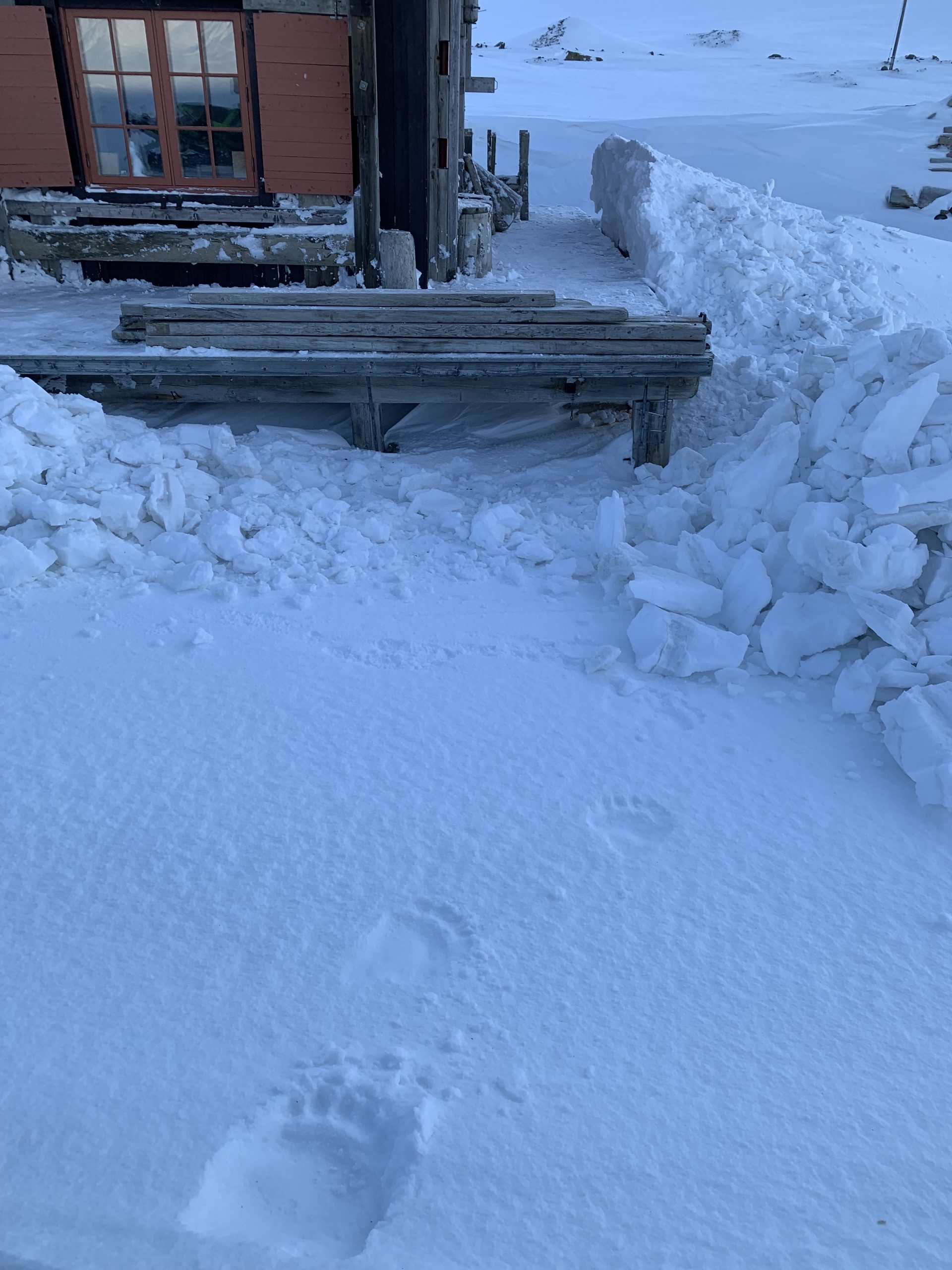
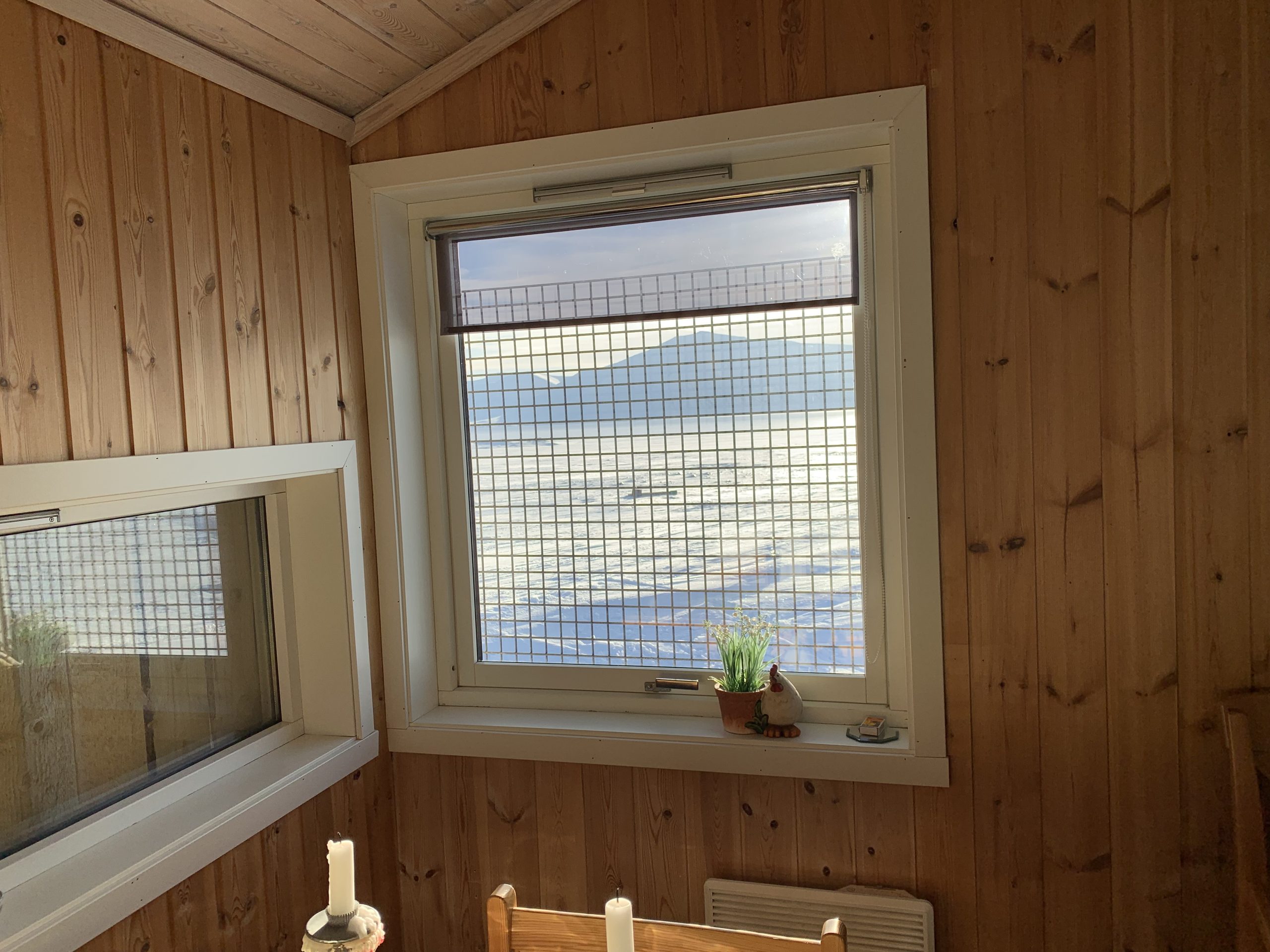
I never saw a bear, but I got up close to one.
We stopped to say hello at a neighboring cabin, and fresh outside the front door were several huge polar bear footprints. Frank-Johnny guesses the bear had been there in the past 12 hours. Seeing the prints may have been more thrilling than actually seeing a bear.
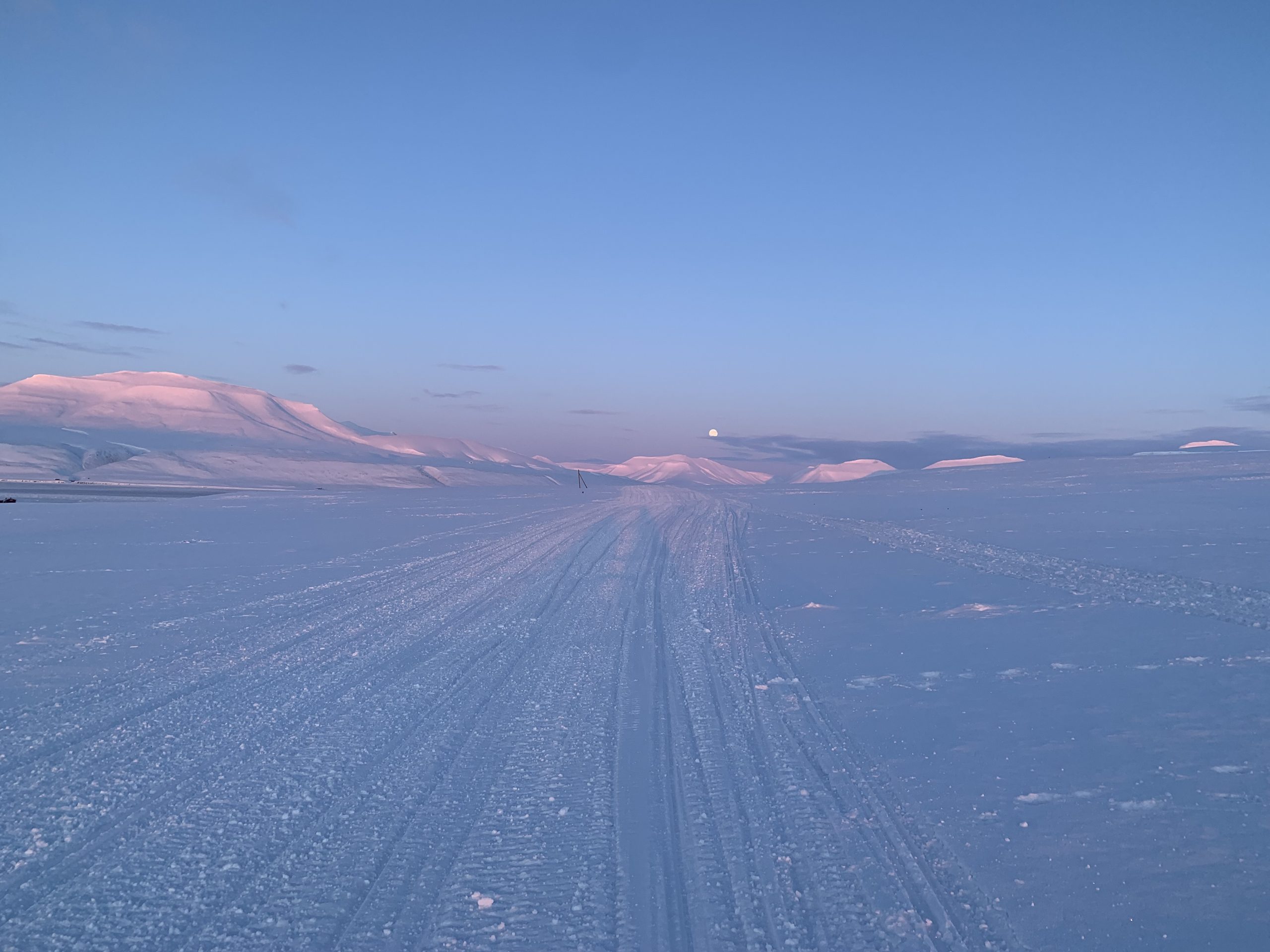
The week before I arrived, the town celebrated the return of the sun. The island experiences Polar night—no daylight whatsoever—from early November until the end of January. When I got there, light had returned, but the sun had only recently become visible. Light was gaining fast, though. In the five days I was there, we gained a whole hour of light.
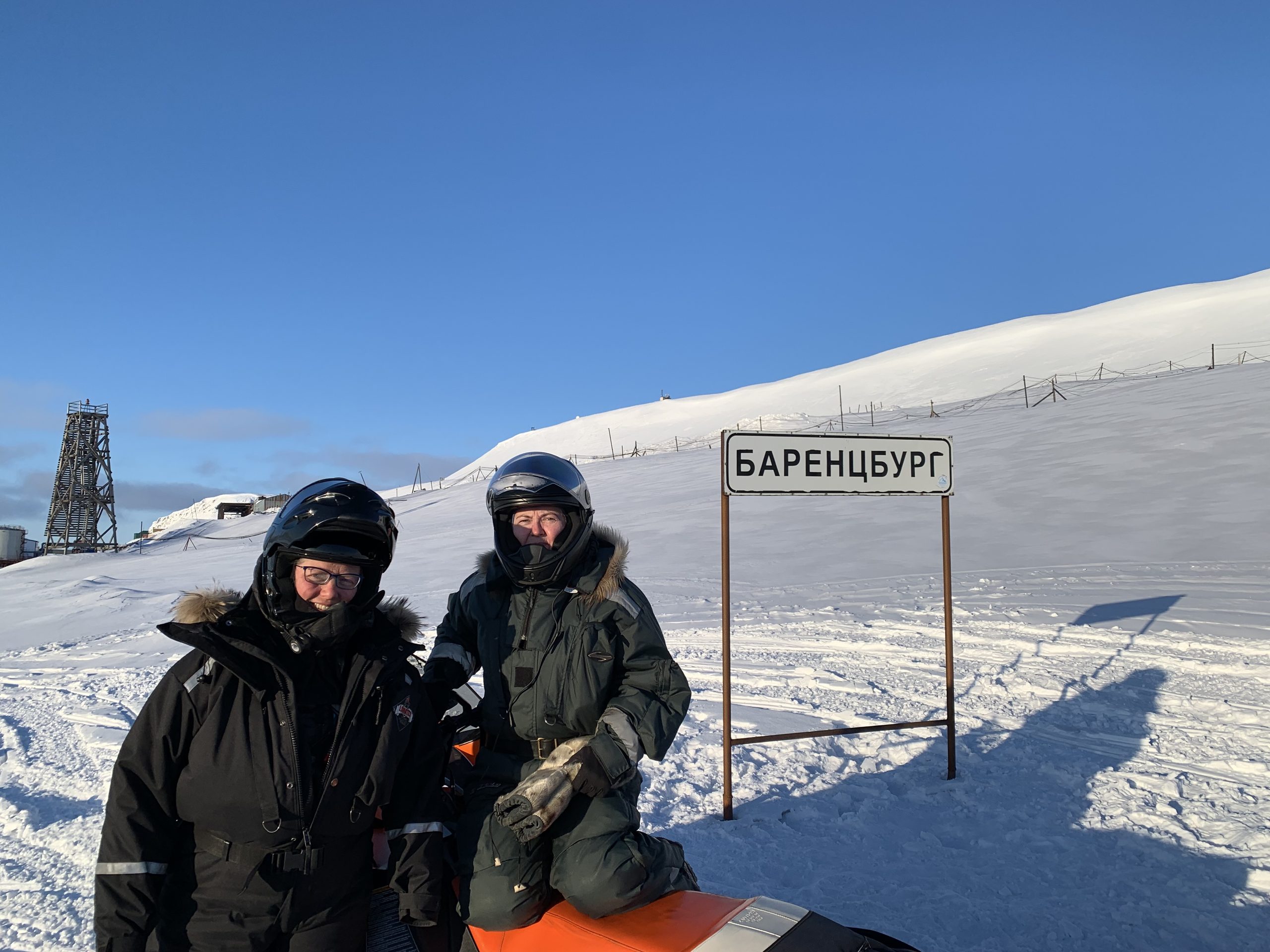
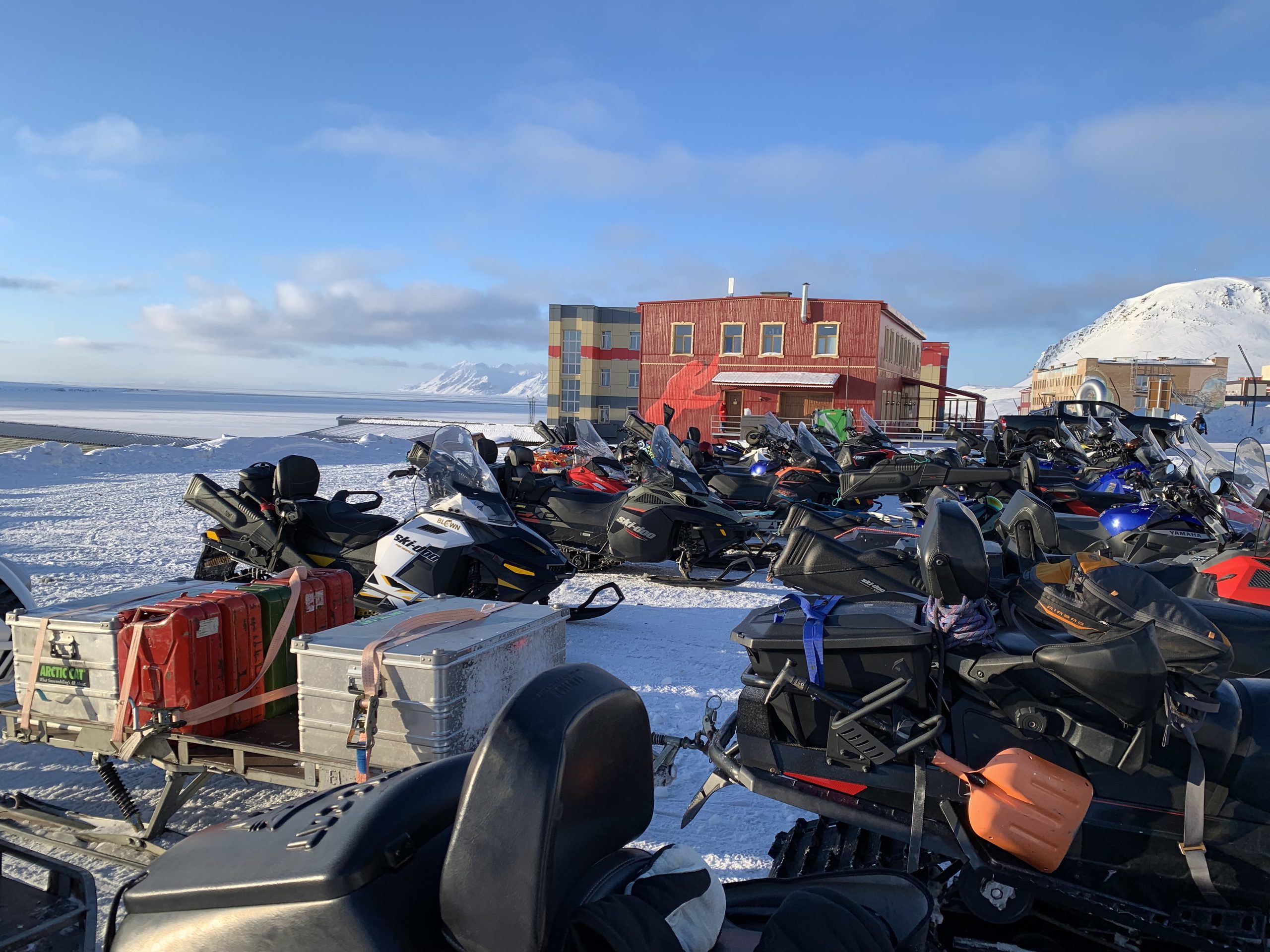
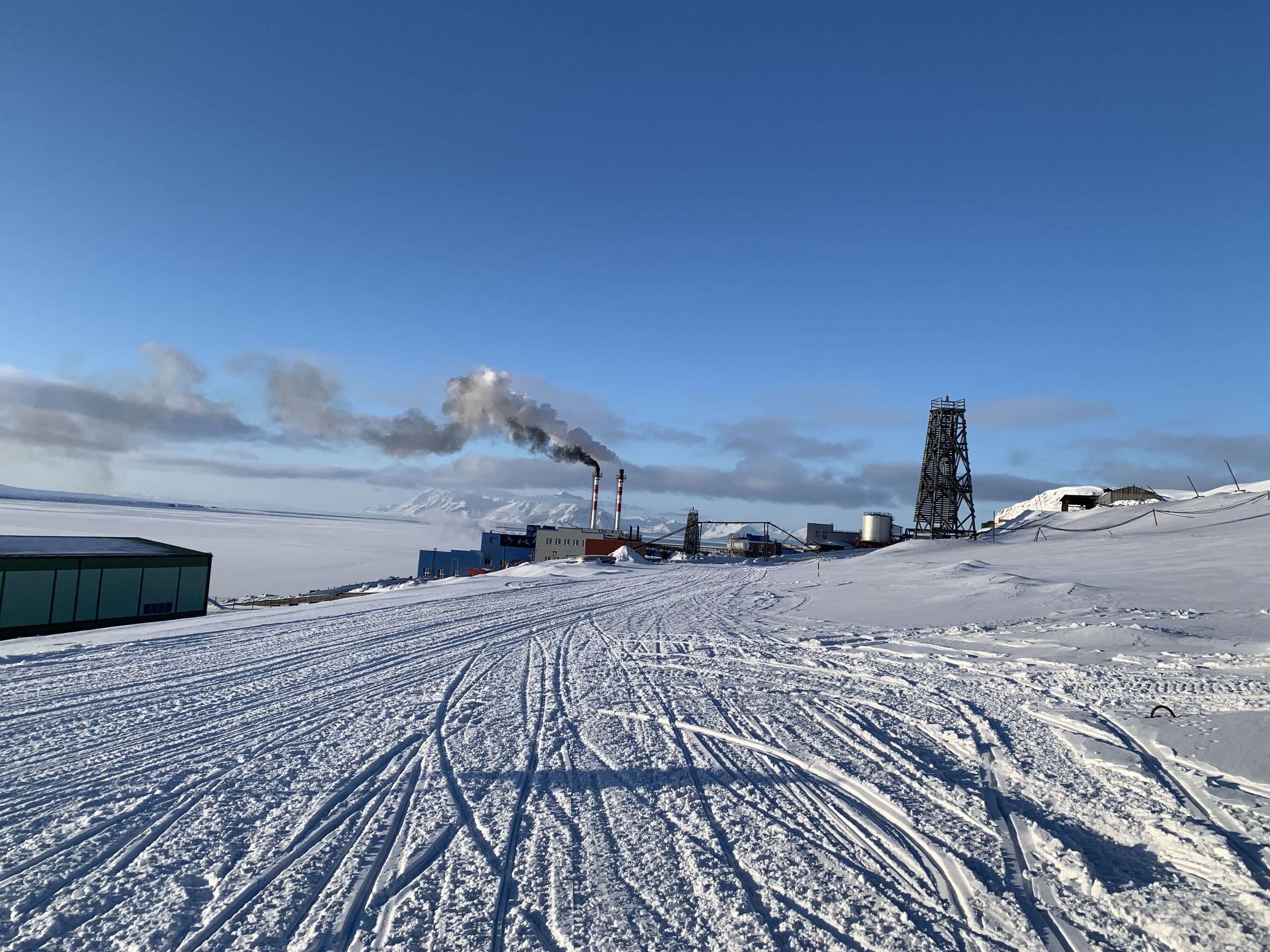
Longyearbyen is a Norwegian settlement. About 35 miles southwest is Barentsburg, a Russian settlement. There is no road between the two towns—only snowmobile and boat access.
We stopped here for dinner when taking the longer, scenic route from the cabin back to Longyearbyen. I opted for borscht, as it seemed like the right thing to do. Inside the restaurant, and to the delight of anyone interested in vintage iron, was the hood of a Soviet-made, single-ski Buran snowmobile.
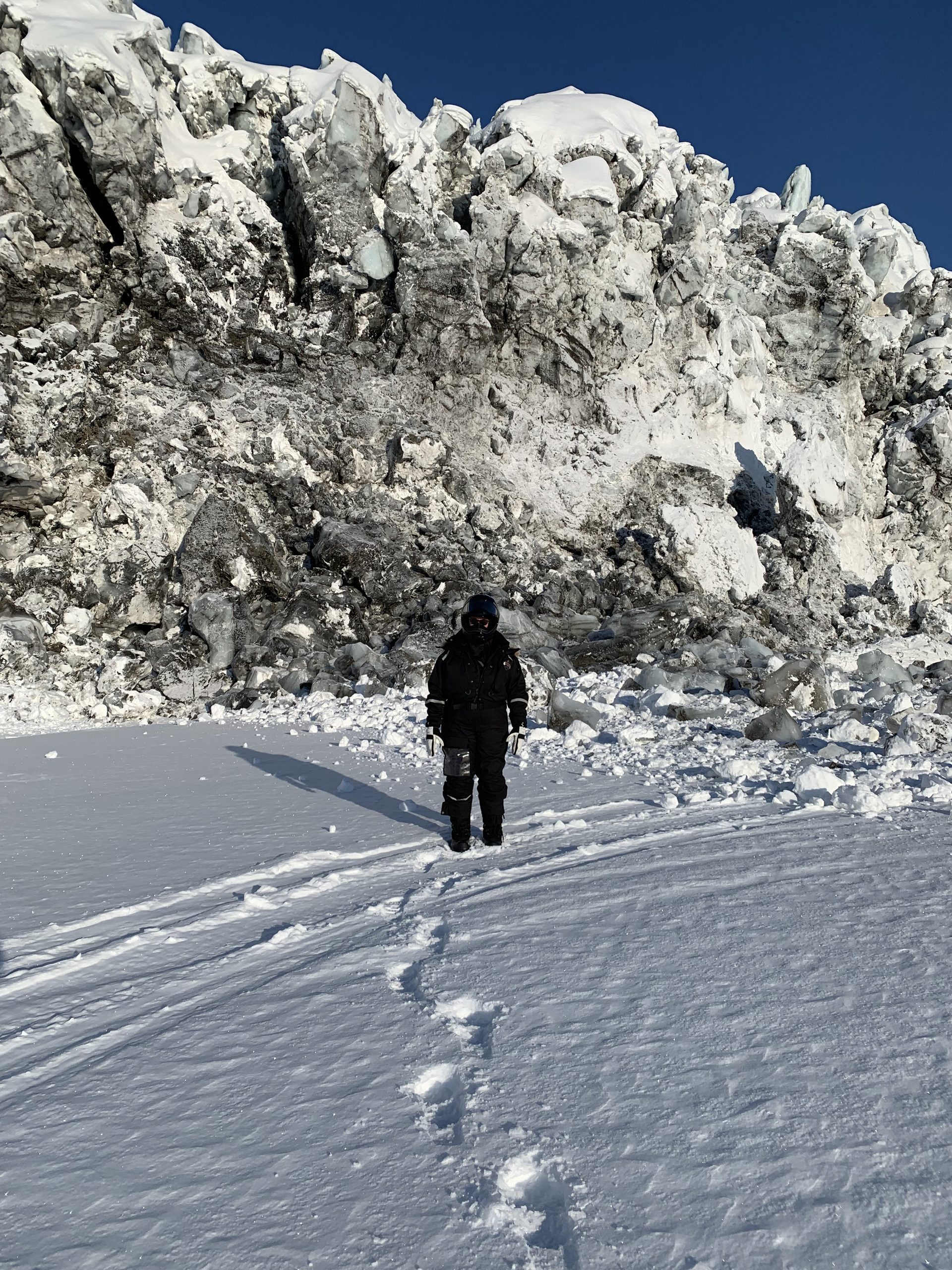
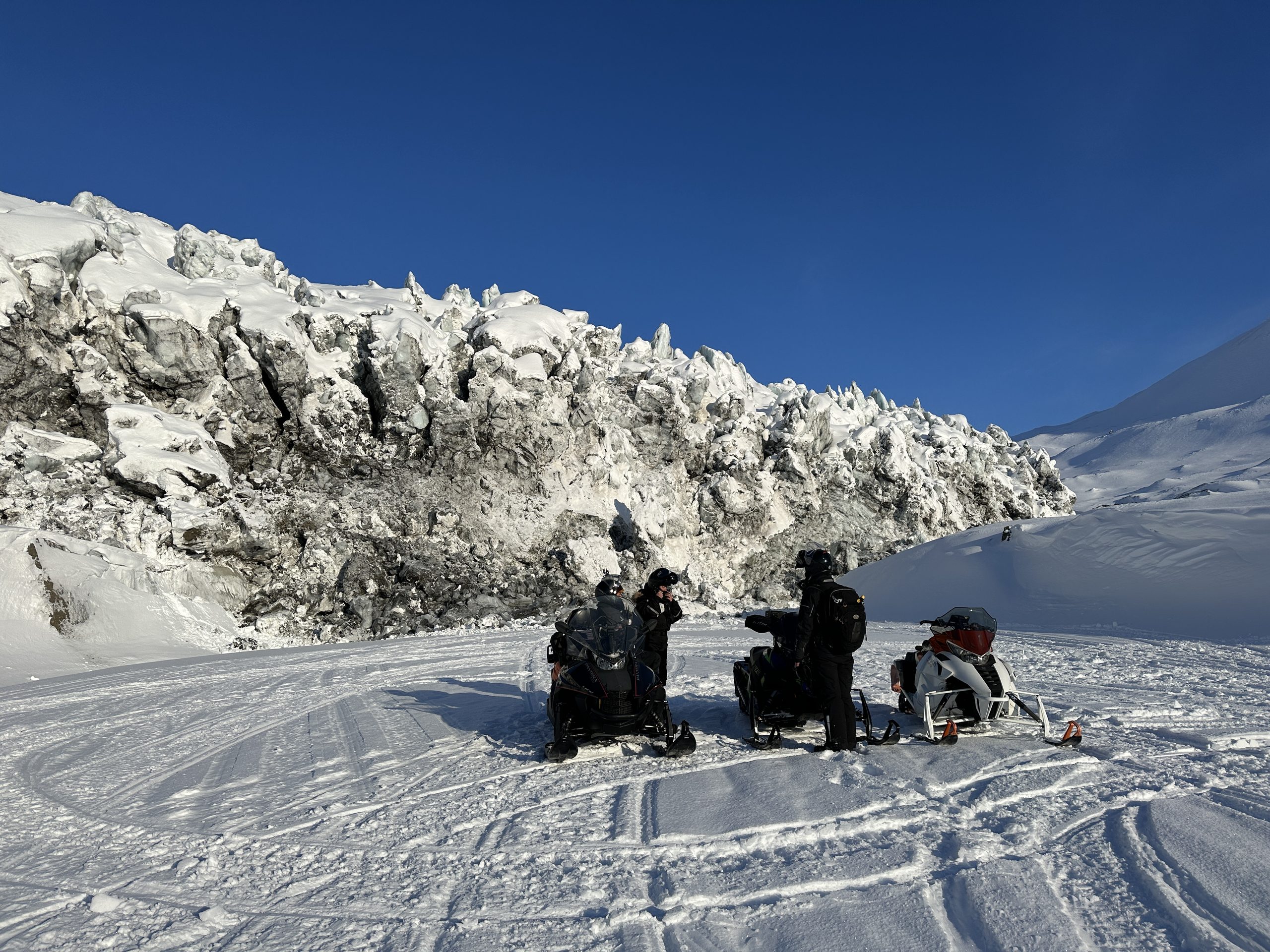
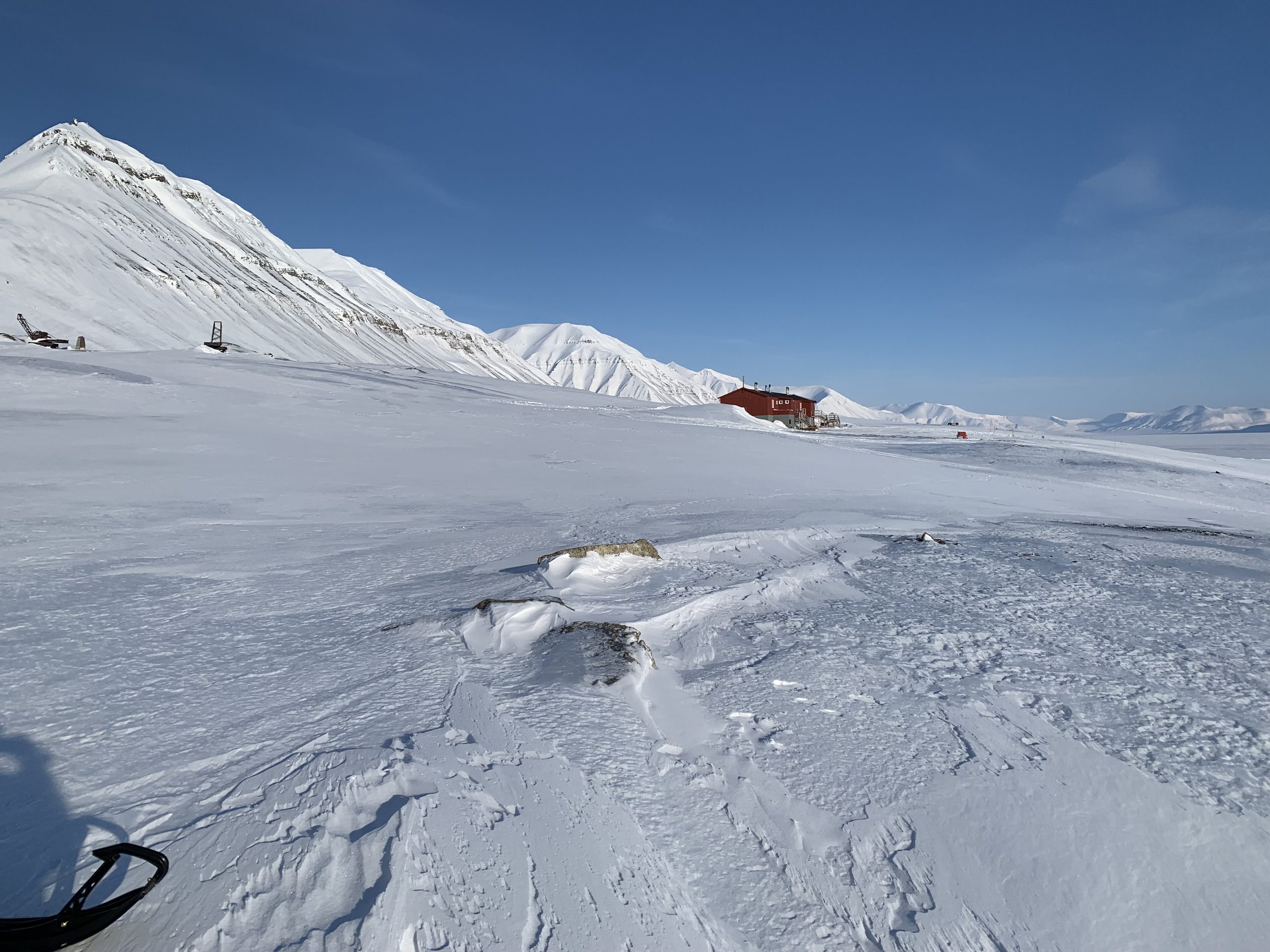
We took an adventure ride to explore the area around the cabin, stopping first at the decommissioned Svea coal mine. Frank-Johnny worked here, and his current cabin was, at one point, workers’ lodging. In 2023, the deconstruction of Svea was complete and returned to a pre-1946 wilderness state.
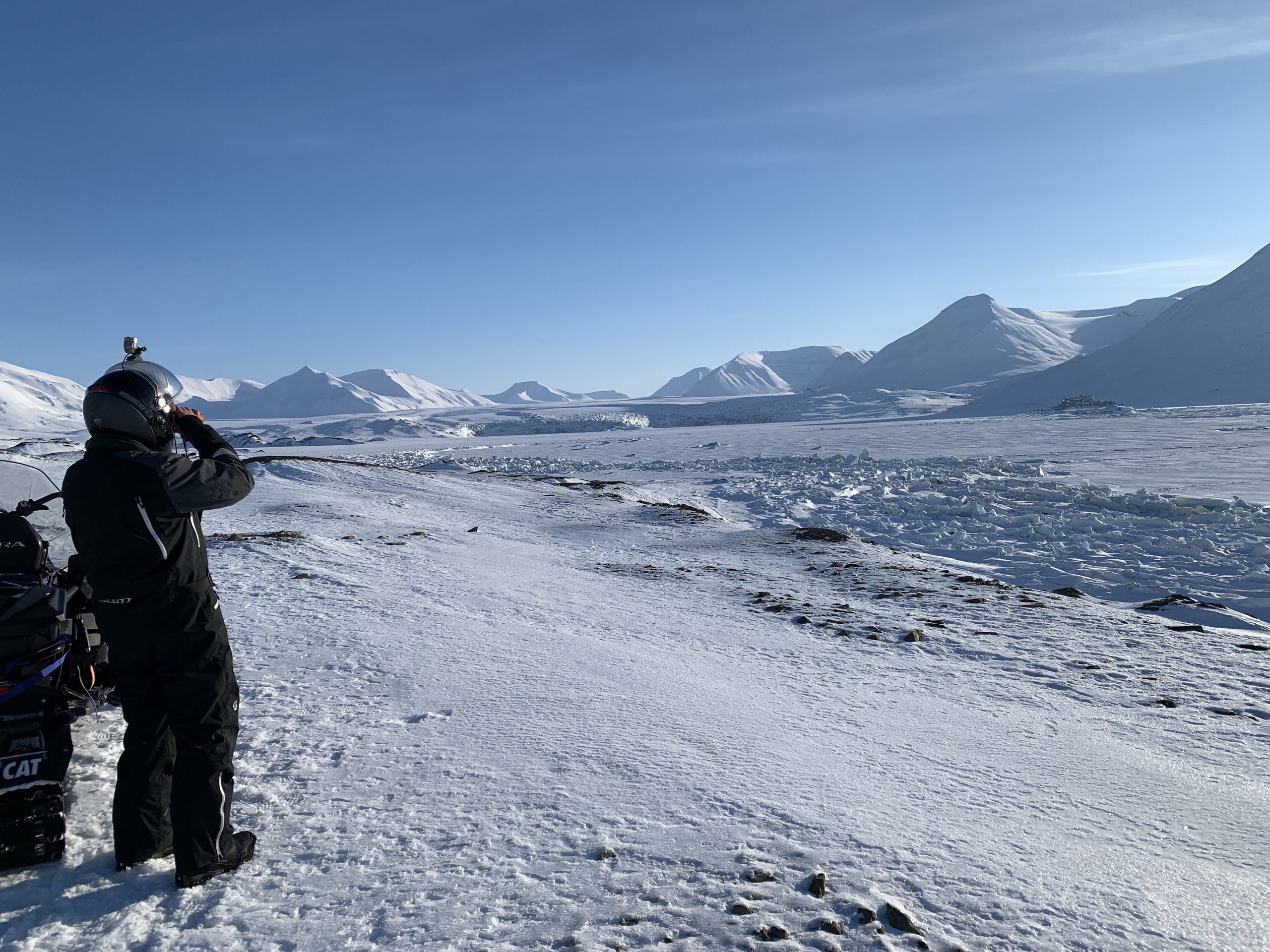
We then continued across the frozen fjord and back onto land, where we stopped. Frank-Johnny explained that we were about to enter a protected area where only residents could drive snowmobiles. So I hopped on the back of his, and we went further inland to view glaciers.
I’m not good at estimating size, but I think the word “intimidating” sums up how puny I felt when I walked toward the face of one of the ice masses. We then found some other glaciers, which we viewed from a distance.
When one anticipates an adventure for three decades, the reality of the trip may not live up to the imagination. I joked with Frank-Johnny that I wanted my money back if I didn’t see a polar bear or the northern lights. I didn’t see either, at least not in the way I expected. I didn’t actually see a bear and I missed the northern lights because I couldn’t get my gear on fast enough before they dissipated. In the end, those two checklist items didn’t matter. My experience went beyond my expectations in many ways and, most importantly, I made memories with long-time friends.