Snow totals don’t tell the whole story, but they do help explain why certain snowmobile destinations rise to the top of every rider’s bucket list. From lake-effect snow belts in the Midwest to high-elevation mountain zones in the West and vast northern trail networks in Canada, North America offers a wide spectrum of riding conditions shaped by climate, geography, and infrastructure.
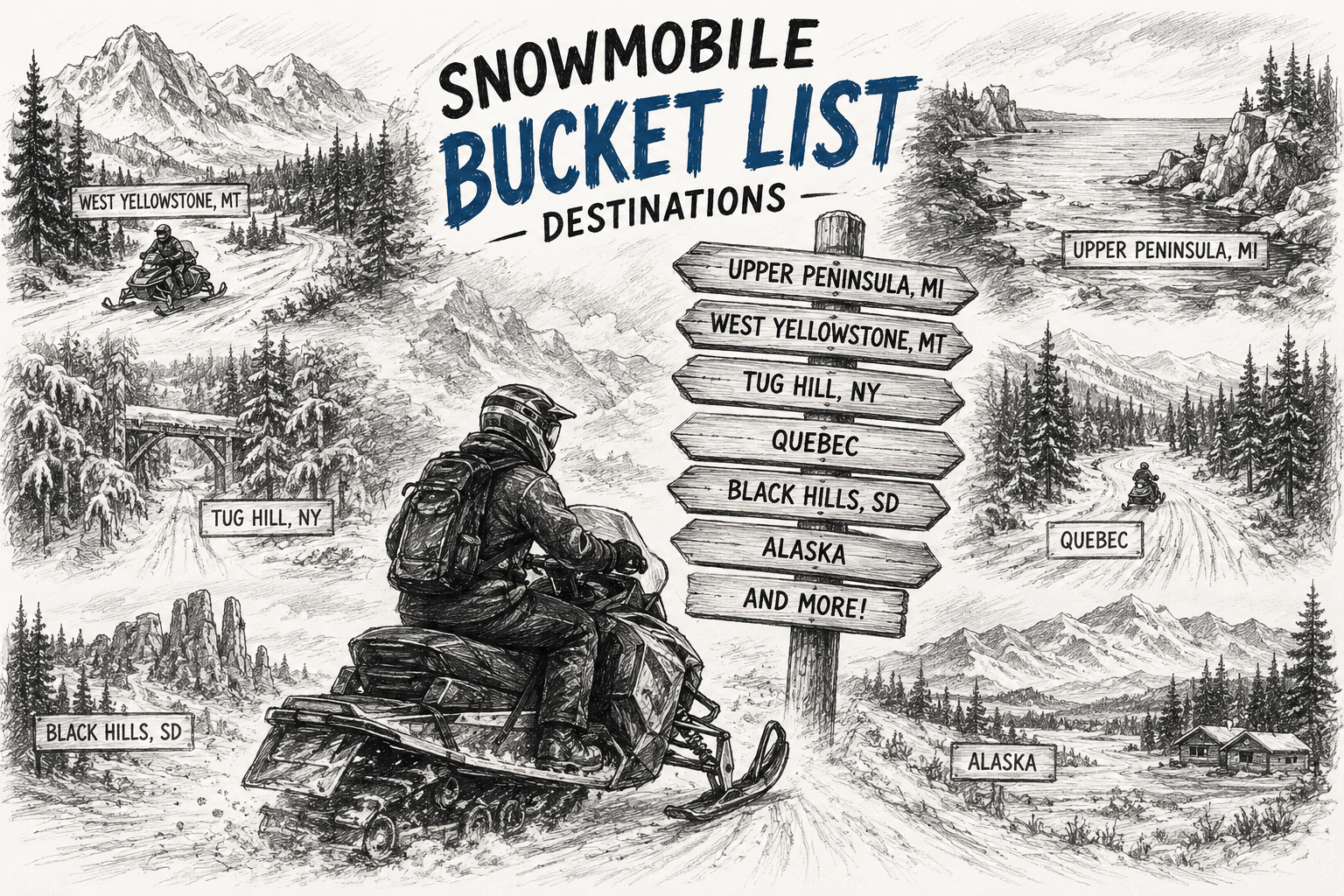
Some places stand out for sheer snowfall volume, others for consistency, and others still for the scale of terrain they open up once winter settles in. This breakdown looks at the snowiest and most iconic snowmobile destinations across the continent, combining long-term snowfall patterns with real-world rider reputation to separate the numbers from the experience.
Keweenaw Peninsula, Michigan
The Keweenaw Peninsula stands out as one of the most reliable heavy-snow regions in the Lower 48, sitting directly in the path of Lake Superior’s lake-effect snow machine. In the most exposed bands, annual snowfall can regularly exceed 200–300 inches, making it one of the snowiest populated snowmobile areas in the United States. That consistent influx of moisture and cold air creates a deep, stable base that often holds strong from early winter through spring.
Beyond the numbers, what makes the Keweenaw truly special is how predictable it is year after year. Riders benefit from long seasons, consistent grooming, and a dense trail network that runs through some of the most snow-sure terrain in the Midwest. It’s often described as a “must-ride” destination because it combines high snowfall volume with infrastructure and variety in a way few regions can match.
Tug Hill Plateau, New York
The Tug Hill Plateau is one of the most intense lake-effect snow zones in the world relative to its size, regularly receiving 200–300 inches of snow annually, with localized pockets seeing even more in strong winter cycles. Situated downwind of Lake Ontario, the region is perfectly positioned to capture moisture-rich storm systems that repeatedly dump heavy snow throughout the season.
Tug Hill isn’t just defined by meteorology, it’s defined by culture. It has become one of the most iconic snowmobiling destinations in the East, with deep community involvement, heavily trafficked trail systems, and a reputation that extends far beyond New York State. Even riders who debate terrain quality acknowledge its significance because when conditions line up, Tug Hill delivers some of the most consistently deep, rideable snow in the region.
Western Maine (Rangeley / Moosehead / Aroostook County)
Northern Maine, including areas like Rangeley, Moosehead, and Aroostook County, is one of the most dependable snowbelt regions in the Eastern United States, with many zones averaging between 80 and 120 inches of snowfall annually and higher totals in localized mountain and inland areas. While it doesn’t always compete with lake-effect extremes, its strength lies in consistency and snow retention.
Cold temperatures dominate much of the winter, allowing snowpack to build and remain stable throughout the season. Maine also boasts one of the most extensive interconnected trail systems in the East, supported by strong grooming infrastructure and a well-established snowmobile tourism economy. The result is a region that’s less about extreme snowfall events and more about dependable riding conditions across a large, varied landscape.
Northern Quebec (Abitibi-Témiscamingue / Saguenay / Gaspé)
Northern Quebec is arguably the largest and most expansive snowmobiling region in the world, with snowfall totals in many areas ranging from 150 to 300+ inches depending on elevation and latitude. Combined with consistently cold winter temperatures, this creates some of the most stable and long-lasting riding conditions anywhere in North America.
What truly defines this region, however, is scale. Thousands of miles of groomed trails connect remote towns and communities, allowing for multi-day and even multi-week expeditions across vast distances. Riding here is less about individual destinations and more about the journey itself, where long stretches of uninterrupted trail and wilderness create a true “big mile” experience that has become synonymous with Quebec snowmobiling culture.
Upper Peninsula, Michigan (overall region)
The broader Upper Peninsula of Michigan is one of the most well-rounded snowmobile regions in North America, with snowfall ranging from roughly 60 inches in lighter zones to over 200 inches in heavy lake-effect corridors like the Keweenaw. While it includes some of the most extreme snowfall pockets in the Lower 48, the UP’s real strength lies in its consistency and infrastructure.
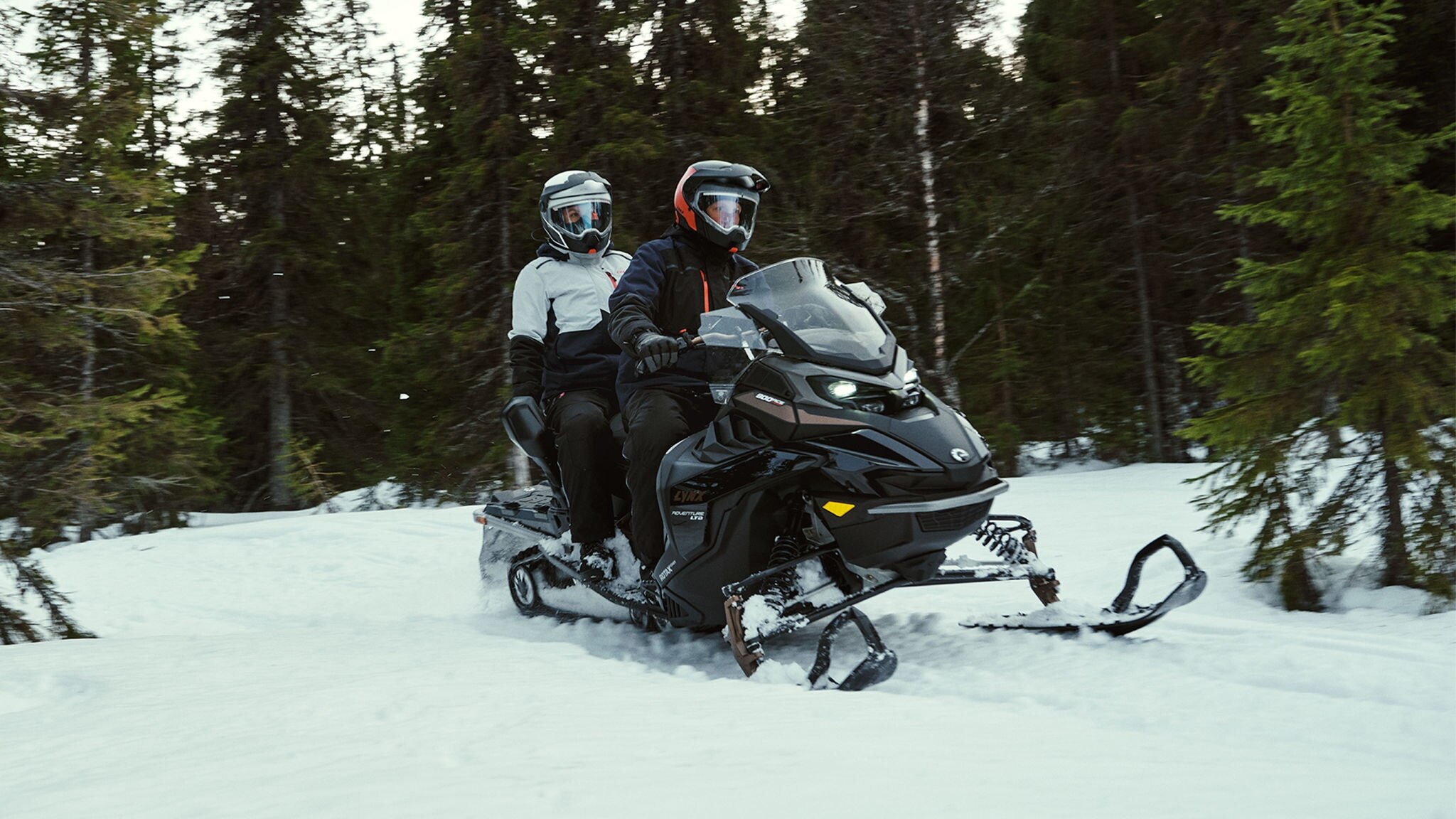
It features one of the most developed snowmobile trail systems anywhere, with thousands of miles of groomed routes connecting towns, forests, and lake-effect snowbelts across the entire peninsula. This balance of reliable snowfall, extensive grooming, and rider-friendly logistics makes the UP a cornerstone destination—less about extremes and more about dependable, accessible, and varied riding throughout the season.
West Yellowstone / Greater Yellowstone Region
West Yellowstone and the greater Yellowstone region sit at the center of one of the most complete snowmobiling environments in North America, shaped by a high-elevation continental climate that routinely produces 150 inches or more of annual snowfall in surrounding mountain zones. Long, cold winters and strong orographic lift off the surrounding ranges help preserve snowpack throughout much of the season, creating reliable conditions well into spring.
While it may not top snowfall charts on paper, its importance comes from how all the elements come together in one place. Riders have immediate access to a highly developed network of groomed trails that connect directly into vast backcountry terrain, allowing for a seamless transition between structured riding and wide-open mountain exploration. That combination of accessibility, elevation, and terrain variety is what makes West Yellowstone a benchmark destination—the rare place where trail riding and true mountain snowmobiling coexist at a world-class level.
North Shore & Arrowhead Region, Minnesota
The North Shore and Arrowhead Region of Minnesota is one of the most dependable snowmobiling zones in the Midwest, offering a balance of consistent snowfall, strong infrastructure, and easy accessibility. Annual snowfall typically ranges from 40 to 80 inches, but localized lake-effect influence from Lake Superior can push totals higher in key corridors, especially along the higher terrain east of the lake.
While it doesn’t compete with the extreme totals of lake-effect hotspots farther east, what makes this region stand out is reliability—cold temperatures arrive early, snow tends to stick around, and the grooming network is among the most established in the country. Riders also benefit from a dense system of interconnected trails that run through forests, along ridgelines, and between small towns that cater heavily to winter tourism. The result is a region that may not be extreme but is consistently rideable and easy to access throughout much of the season.
Alaska (Interior + Southcentral regions)
Alaska’s Interior and Southcentral regions sit in a category of their own when it comes to snowmobiling, combining substantial snowfall with a scale of terrain that simply doesn’t exist in the Lower 48. Many areas average 70 inches or more annually, while alpine and mountain zones can see significantly higher totals depending on elevation and storm patterns.
Snowfall alone doesn’t define the experience here. What sets Alaska apart is the absence of constraints—vast stretches of untouched terrain, minimal infrastructure, and an environment where riders often rely on navigation skills and local knowledge as much as throttle control. It’s the kind of place where groomed trail systems fade into the background and the focus shifts to exploration, endurance, and access. From open river valleys to remote mountain basins, Alaska delivers a form of snowmobiling that feels closer to expedition travel than recreation, making it one of the most raw and expansive riding environments in the world.
Wyoming / Idaho Backcountry (Teton + Island Park zones)
The Wyoming and Idaho backcountry, especially around the Teton Range and Island Park, represents some of the most iconic mountain snowmobiling in the Lower 48. While average annual snowfall in the broader region often sits in the 50-inch range or higher, localized zones in the Tetons and surrounding high country can see significantly more due to elevation and orographic snowfall patterns.
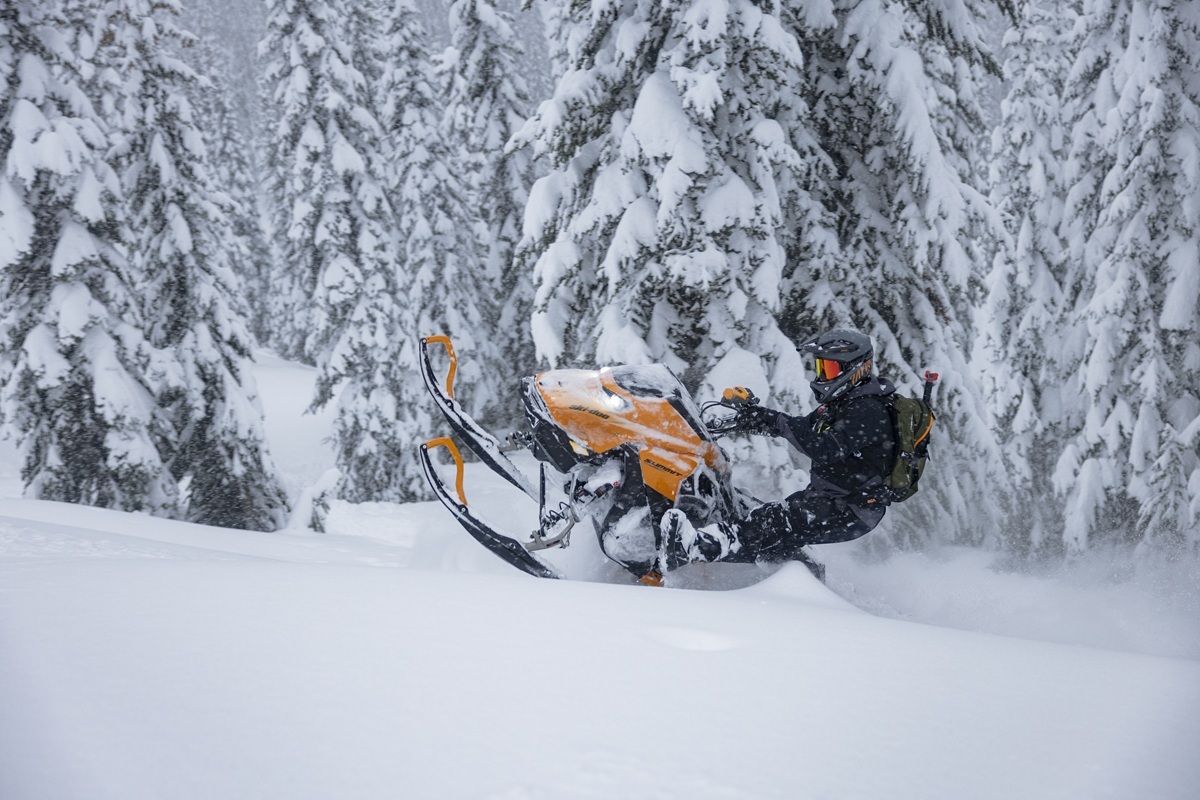
What really defines this area isn’t just accumulation, but how the terrain amplifies it. Steep drainages, alpine bowls, and wide-open meadows combine with consistent cold temperatures to produce deep, high-quality powder conditions throughout much of the season. Island Park in particular serves as a major gateway, offering direct access to expansive riding terrain with a mix of groomed corridors and immediate backcountry access. For many riders, this region represents the modern standard for mountain snowmobiling—technical, scenic, and consistently rewarding when conditions align.
Northern Ontario (Wawa / Hearst / Timmins corridor)
Northern Ontario’s Wawa, Hearst, and Timmins corridor is one of those regions that quietly delivers some of the most dependable snowmobiling in North America without always showing up at the top of snowfall rankings. While it may not compete with lake-effect hotspots in terms of raw totals, what it lacks in headline numbers it makes up for in consistency. Cold temperatures hold snowpack in place for long stretches of the season, and the extensive grooming network keeps trails in excellent condition once winter sets in.
Riders can expect long, uninterrupted stretches of maintained trail that connect remote communities across an enormous landscape. Compared to Quebec, it’s less about extreme snowfall events and more about reliability and rideability. For riders chasing distance, exploration, and multi-day adventures, this corridor stands out as a true “big mile” destination where the trail system itself is the main attraction.
Follow The Snow
When you step back and compare these regions, a clear picture emerges: the “snowiest” destinations aren’t always the ones riders value most, and the most famous riding areas aren’t always the ones with the highest snowfall totals. Places like the Keweenaw Peninsula and Tug Hill Plateau earn their reputation through relentless lake-effect snow and reliable seasons, while regions like Northern Quebec and Northern Ontario stand out for scale and mileage.
Out west, destinations like West Yellowstone and Wyoming’s backcountry combine elevation-driven powder with access to vast terrain, and Alaska operates on an entirely different level—where wilderness and freedom outweigh infrastructure altogether. In the end, the best snowmobile destinations are defined by more than inches of snow, they’re defined by what that snow unlocks once you point the sled down the trail.