Putting your snowmobile away for the off-season isn’t just about parking it and walking away. A little effort in the spring can save you time, money, and frustration when winter returns. Proper storage helps prevent corrosion, fuel issues, dead batteries, and worn components, all of which can delay your first ride of the season.
What You’ll Need
Before you start, gather everything you’ll need so the process goes smoothly:
- Fuel stabilizer
- Fogging (storage) oil
- Chaincase oil
- Battery maintainer or trickle charger
- Breathable snowmobile cover
- Cleaning supplies (mild soap, brushes, microfiber towels)
- Basic tools and your owner’s manual
Step 1: Clean It First
Wash Away the Season
Start with a thorough wash. Dirt, salt, and grime, especially underneath the tunnel and suspension, can hold moisture and lead to corrosion over time. Use a mild detergent and a soft brush to get into tight spots. Once washed, dry the sled completely. Leftover moisture is one of the biggest contributors to off-season rust.
Inspect While You Clean
This is also the perfect time to look over your machine. Check for worn parts, loose hardware, fluid leaks, or anything that looks off. Pay close attention to suspension components, steering parts, and the engine area.
Fixing problems now is easier than scrambling to do it right before the first snowfall. If something looks borderline, make a note so you can address it early next season.
Step 2: Take Care of the Fuel System
Fuel doesn’t age well, and sitting all summer can cause it to break down and gum up your system.
Option 1: Stabilize the Fuel
If you plan to leave fuel in the tank, add a stabilizer and then run the engine for a few minutes. This ensures treated fuel moves through the entire system, including injectors or carburetors. It’s also good to use an ethanol free fuel for this.
Option 2: Drain the System
For longer storage periods, draining the fuel is the most foolproof method. Make sure to remove as much fuel as possible from the tank and system. Carbureted sleds should have their float bowls drained, while fuel-injected models may require specific procedures. Check your manual.
Step 3: Protect the Engine and Drivetrain
Change the Oil (4-Strokes)
If you ride a 4-stroke sled, change the engine oil and filter before storage. Used oil contains contaminants that can settle and cause internal damage if left sitting for months. You want to leave your engine with nice, clean oil.
Fog the Engine
Fogging oil is a key step many riders skip. Remove the spark plugs and spray fogging oil into each cylinder, then rotate the engine to distribute it. This creates a protective coating that helps prevent internal corrosion.
Lubricate Everything That Moves
Go through the sled and grease all major fittings, including suspension pivot points, steering components, and driveshaft or axle bearings.
Also, drain and replace the chaincase/gear oil according to your service schedule. Fresh lubrication helps prevent moisture damage and keeps everything ready for next season.
For added protection, lightly coat exposed metal parts with a corrosion inhibitor.
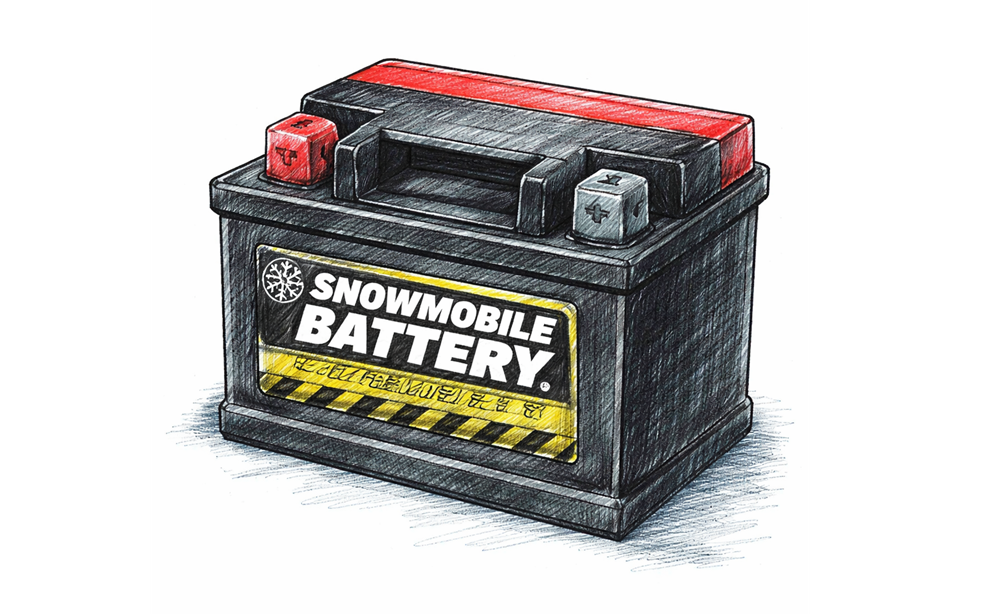
Step 4: Don’t Ignore the Battery
A neglected battery is one of the most common reasons sleds won’t start in the fall.
Disconnect, Clean, and Keep Charged
Remove the battery, disconnecting the negative terminal first. Clean the terminals and make sure there’s no corrosion buildup. Store the battery in a cool, dry place and connect it to a maintainer. This keeps it properly charged and prevents sulfation, which can permanently reduce battery life.
To learn more about battery storage, read here.
Step 5: Take Pressure Off the Suspension and Track
Loosen Track Tension & Elevate
Backing off track tension helps reduce stress on the suspension system and prevents unnecessary stretching.
One of the most important steps is to get the track off the ground. Use a stand or blocks to lift the rear of the sled. To learn more about lifting your track, read here.
Before storing, make sure all suspension components are properly lubricated to prevent rust and keep them moving freely.
Step 6: Choose the Right Storage Spot
Whenever possible, store your snowmobile in a dry, well-ventilated space like a garage or shed. This protects it from moisture, sunlight, and temperature swings.
If you need to store your snowmobile outdoors, extra precautions are essential to protect it from the elements. Keep the sled off the ground using blocks or a stand to prevent moisture buildup, and take steps to deter rodents by blocking the exhaust and intake and using repellents as needed. Cover the snowmobile with a high-quality, breathable cover that shields it from weather while allowing moisture to escape. Finally, choose a location with shade and good drainage to minimize exposure to sunlight and standing water, helping preserve the sled throughout the off-season.
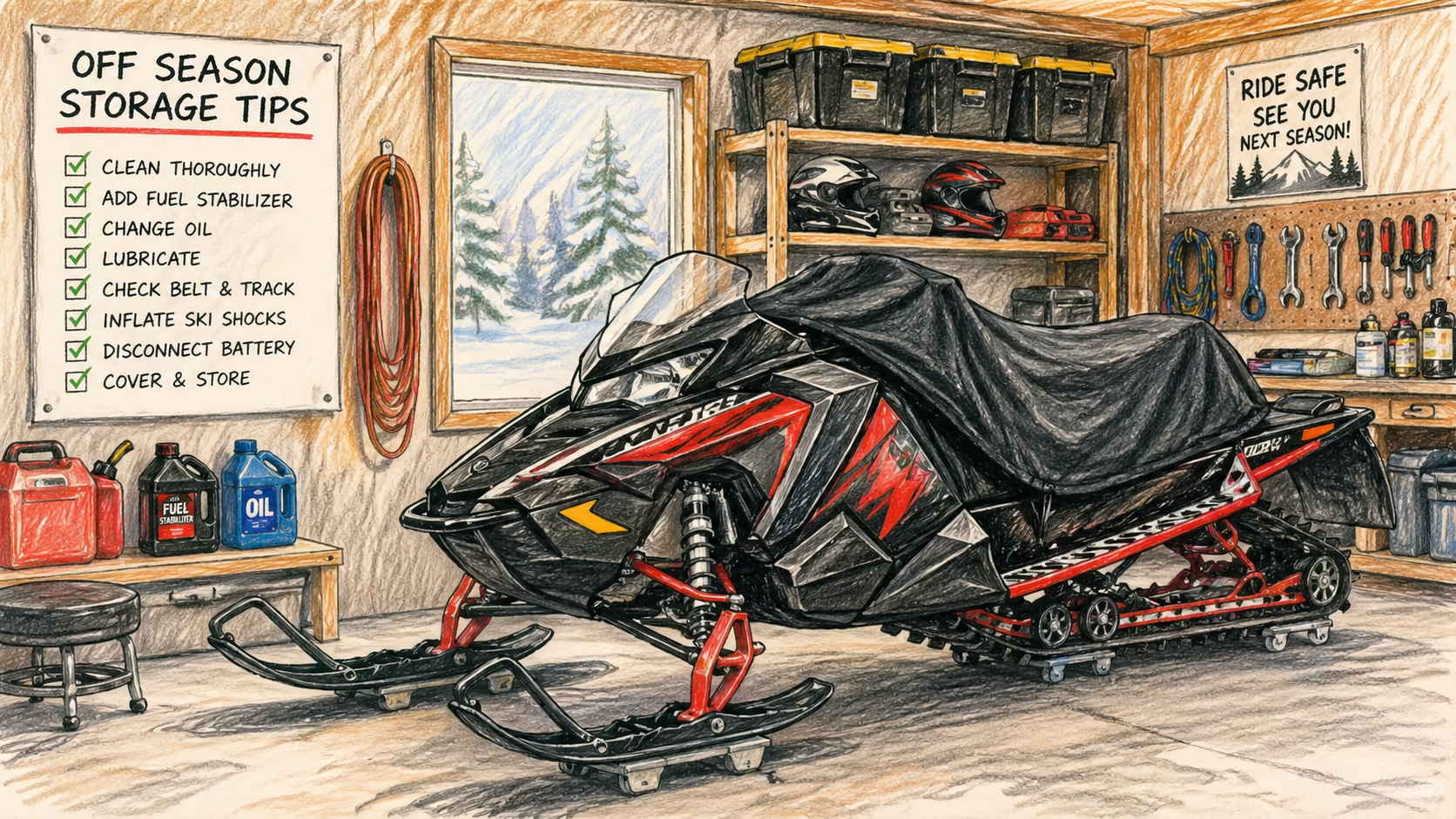
Quick Storage Checklist
- Wash and dry the sled thoroughly
- Inspect for damage or wear
- Stabilize or drain fuel
- Change oil and fog the engine
- Lubricate suspension and drivetrain components
- Remove and maintain the battery
- Loosen track tension and elevate the rear
- Store in a dry location with a proper cover
Set Yourself Up for Next Season
When fall rolls around, a properly stored sled makes preseason prep quick and easy. You’ll still want to check fluids, inspect components, and make sure everything is in working order, but you won’t be dealing with preventable issues.
A few hours in the spring can mean the difference between wrenching in the garage or being first on the trail when the snow flies.