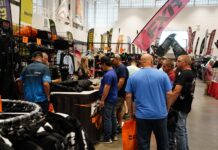
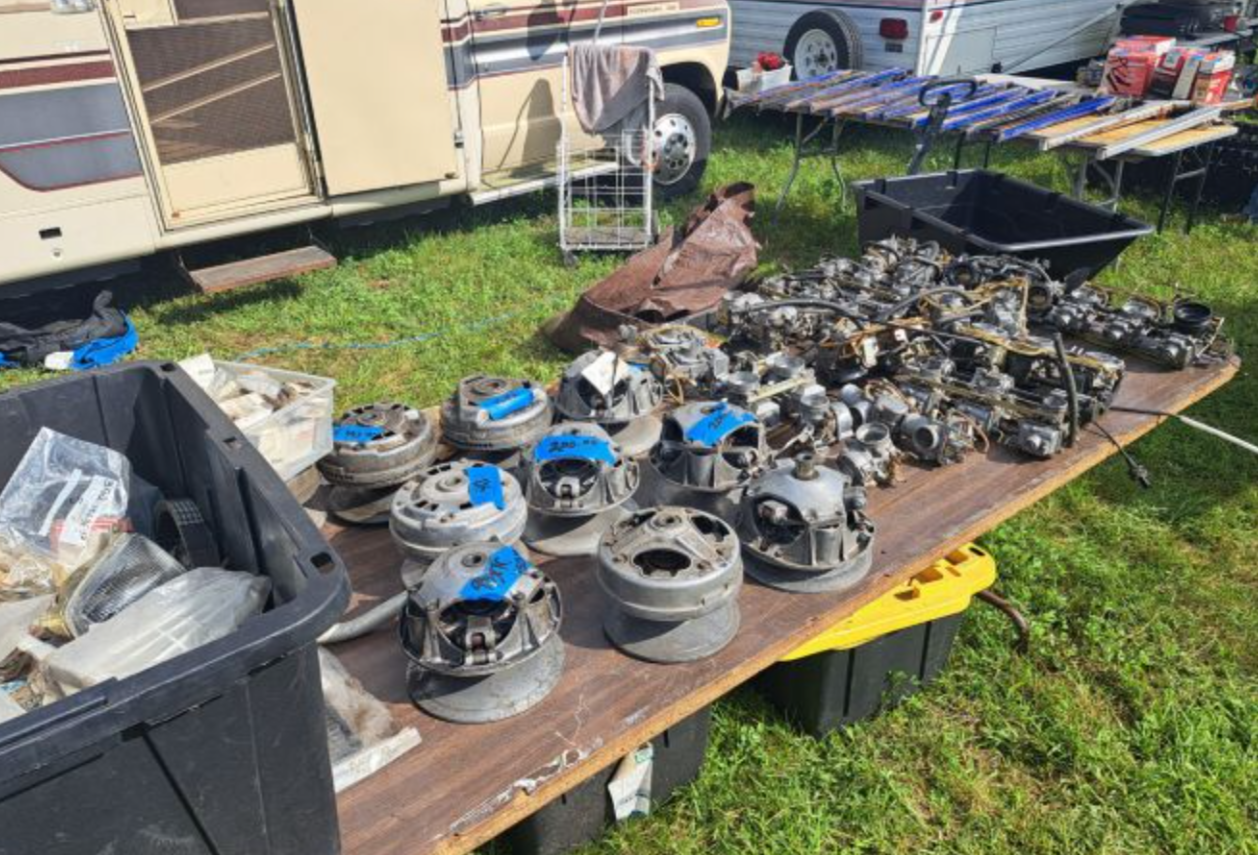
A swap meet filled with used parts, old sleds, worn gear and other treasures is bliss to some motorheads. For others, it can feel rather intimidating.
Sellers at these events vary dramatically. They can be small business owners who make a living parting-out snowmobiles; shade-tree mechanics clearing shop space; competitors pawning off “only raced once” sleds (that usually look like they’ve barely survived a full season of abuse!); vintage collectors selling hard-to-find relics; and plenty more.
These folks fill parking lots or fields with tables and trailers of used equipment and often mix in various odds-and-ends – from backpack leaf blower to collectable lunch boxes, ratty old dirt bikes to Dick Trickle memorabilia, or anything else under the autumn sun.
This article originally appeared in the November 2025 issue of Snow Goer magazine. That means you could have enjoyed it long ago if you only subscribed! Go ahead and sign up today to get the print or digital edition of the magazine and feed your love of the greatest winter sport ever created.
Buyers vary dramatically as well. Some are seasoned bargain hunters who love to buy and sell equipment. Others are novices who are curious about what’s available or who may be looking for specific parts: an unblemished hood to replace one they wrecked, an air box for the 1990s-era sled they’re resurrecting for the grandkids, or the final missing pieces for a restoration project.
To help the less experience swapping group, we turned to our resident swap enthusiast , Jeff Oberg. He’s spent decades buying and selling used parts. Here are his 10 tips for successfully swap shopping. With limited space, we had him focus specifically on hard parts, not full machines.
1) Get Ready
Do some prep work before leaving home. Make an inventory of the parts you need, take detailed pictures and measurements (if applicable) of the items you’re replacing , and do some research online to discover the relative value of the things you’re seeking. All will help you find exactly what you need while not overpaying for it.
2) Get Set
Dress for the weather, wear comfortable yet supportive shoes and plan to get to the swap early to get the best deals. Beyond that, consider the sizes, shapes and weights of the things you might buy to determine whether you should bring a cart, dolly or
backpack to haul around your prized treasures. And finally, consider bringing a tape measure – maybe even a flexible cloth tape measure, depending on what you’re looking for.
3) Go! To The Bank
You can swipe your credit card for almost everything these days, but at swap meets cash truly is king. Bring plenty. Some veteran swappers even split their bills between pockets so they can claim “I only have 60 bucks on me – that’s my highest offer” while still carrying more.
4) Lies, Damn Lies & Swappers!
It sounds harsh but go to a swap meet expecting the worst from humanity.
“Assume everybody is lying to you, or at least not telling you the whole truth,” Oberg said. Ask questions, read their faces and body language as best you can, but remember you’re often buying used parts from strangers who know they’ll likely never see you again.
That said, the way some swappers love to buy-and-sell, the owner may not be purposely dishonest; they’re just repeating the story they were told when they bought the item.
5) Gauge The Swapper
Not all swappers are alike. Some are professional used parts retailers who run businesses and have a reputation to protect . You’ll often pay a bit more for parts on their table, but they tend to be more forthcoming, and they may even give you return privileges. That has value.
At the other extreme are swappers with random piles of unmarked stuff. Typically, they are less likely to have prices on their wares or to have the parts properly labeled. Some of those guys can seem kind of sketchy, but if you know exactly what you’re looking for they often have the best bargains. Most sellers fall between those extremes.
6) Size It Up
When shopping for hard parts, fitment is vital, and it’s easy to buy the wrong thing. Use that tape measure you bought to double-check dimensions, like drive belt width, track pitch and length, or the exact locations of mounting brackets, etc.
7) Ask, Then Research
Ask the seller which exact year, make and model a particular part came from. Then do some quick research on your phone.
For instance, if a trailing arm is labeled “fits all 2001-2008 EDGE chassis sleds,” that’s not actually possible. Polaris made slight changes during those years and the trailing arms are not interchangeable . If the seller knows it came off a 2002 model, a quick look at an online parts fiche can confirm compatibility.
8) Inspect!
Very carefully inspect items you’re considering purchasing. Big flaws – like a chaincase dent or missing track lugs – should be obvious. But look closer , for example, for small cracks, broken mounting bracket tabs, flat spots on belts or wear that doesn’t match the seller’s story.
“I’ve had guys tell me a track only had 1,000 miles, but the track clips tell me it’s probably got more than 8,000 on it,” Oberg said.
When walking one aisle at Hay Days, Oberg pointed toward a bunch of body side panels. “This one doesn’t have any of the fastening dzus [the quarterturning pins] but that one does,” he said. If you buy the first one, he noted, you may need to spend another $40 at a dealer for parts.
9) Buyers Be Very Beware
Buying used electrical components like stators or CDI boxes can be especially precarious.
“You could bring a multimeter and test a stator for resistance,” Oberg pointed out, “but you won’t know if it’s going to work once [the part] gets warm.” That being said, because many dealers don’t allow returns on electrical parts, many new or lightly used ones do end up in swap meets.
10) Negotiate
When it comes to haggling, Oberg grinned and said, “The first person to throw out a number typically loses!
“I’ll ask, ‘What’s your bottom price’ and then offer a little less than that. If somebody has something labeled as $80, they’ll likely sell it for $50. Some folks worry about being insulting, but you’re not out there to make friends, and neither are they.”
Still, Oberg said he has paid face value for some items that are fairly priced, despite his true joy of haggling over a price.