
Should You Elevate Your Snowmobile Track in the Off-Season?
When the riding season ends, how you store your snowmobile plays a major role in how it performs when the snow returns. Riders often focus on fuel stabilization, battery maintenance, and cleaning, but one of the most overlooked (and most important) steps is getting the track off the ground.
Elevating the rear suspension can significantly extend the life of key components and reduce headaches months down the road.
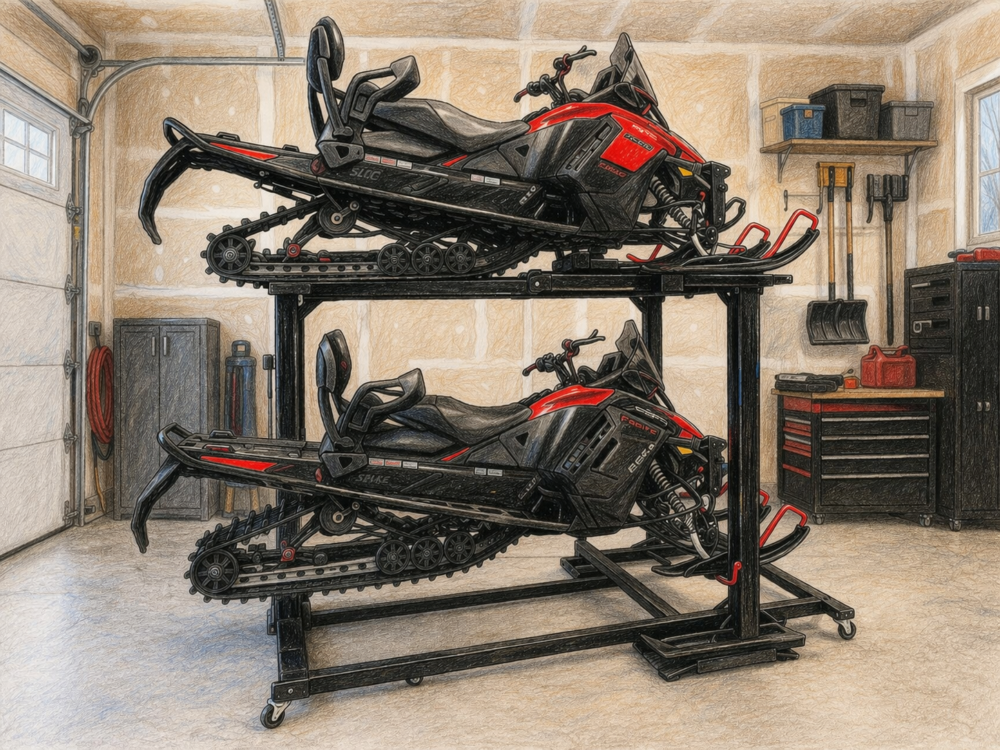
Why Elevating Your Track Matters
Most riders understand the obvious benefits of elevating the track: preventing track rot and helping preserve lug shape, but the advantages go deeper than that.
First, elevating the track removes constant pressure from the rear suspension system. When a sled sits for months, its full weight compresses the suspension. Components like springs, torsion arms, and shock internals sit compressed. Over time, this leads to reduced suspension performance, sagging ride height, and a harsher ride. Lifting the track allows the suspension to remain in a more neutral position, preserving its intended geometry and performance.
Second, it helps protect idler wheels and bearings. When a sled sits stationary, those wheels are pressed into one position for extended periods. Moisture can settle in, grease can migrate, and flat spots or corrosion can develop. Elevating the track reduces that static load and promotes longer bearing life.
Another often overlooked benefit is hyfax (slide rail) preservation. Sitting in one position for months can create uneven wear patterns or even slight deformation, especially in warmer conditions. Keeping the track off the ground reduces pressure points and helps maintain consistent contact surfaces.
Rodent prevention is also a factor. Tracks that sit directly on the ground are susceptible, especially in garages, sheds, or outdoor settings. They can become easy access points for mice and other critters. Elevating the sled makes it less inviting and removes one pathway into the chassis.
Finally, airflow matters. Getting the track off the ground allows better air circulation underneath the sled, helping moisture evaporate and reducing the chance of rust forming on clips, studs, and metal components.
The Risk of Leaving It Sitting
Letting a snowmobile sit flat on the ground all off-season can lead to a surprising list of issues: cracked or deformed lugs, weakened suspension springs, seized bearings, and premature wear on slides. Even in controlled environments, temperature swings and humidity can take a toll when weight is constantly applied in one position.
Fortunately, elevating your snowmobile is simple, and there are several effective methods depending on your setup and budget.
Rear Lift Stand
A dedicated snowmobile lift stand is the most stable and purpose-built solution. These stands cradle the rear bumper and lift the track completely off the ground. Many are lightweight, foldable, and easy to store, making them a favorite among frequent riders.
Track Stand / Storage Stand
Track stands are designed specifically for off-season storage. Some models support both the skis and rear suspension, keeping the entire sled elevated and level. This is one of the best options for long-term storage, as it removes pressure from both ends of the machine.
Improvised Block Method
If you don’t have a stand, a simple and effective alternative is using a sturdy block of wood, crate, or jack stand under the rear bumper or hitch. The key is stability, so make sure whatever you use won’t shift over time. Avoid placing support directly under delicate components.
Ceiling Hoist System
For garage setups, a pulley or hoist system can lift the rear (or entire sled) off the ground. This method keeps the sled completely suspended, maximizes floor space, and eliminates all ground contact, though it requires proper installation and secure mounting points.
Additional Pro Tips
No matter which method you choose, a few extra steps can maximize the benefits:
- Clean and dry the track before storage to prevent corrosion
- Rotate the track slightly every few weeks if it’s not fully suspended
- Store in a cool, dry place when possible
- Combine elevation with proper suspension relaxation (loosening limiter straps slightly, if recommended by your manufacturer)
The Bottom Line
Elevating your snowmobile track is a simple step that delivers long-term benefits. From protecting suspension components and preventing track damage to reducing moisture buildup and deterring pests, it’s one of the smartest things you can do when putting your sled away for the off-season.
Come fall, you’ll spend less time fixing problems and more time doing what matters: riding.


I always jack up the snowmobile and let the torsion springs relax.
I always jack up my snowmobile and let the torsion springs relax